




This link will be used to post the title of books, articles and references to material that might be of interest to those that like to read about NSA, its history and cryptology in general. If you come across such material and you think others might be interested, send the information to ncmfweb@aol.com and it will be added to this page.
The postings have been rather loosely categorized and grouped into: Books and Things, Cryptanalysis, In the News, NSA Directors, Places and Things, Sources, Videos and Web Sites.
Special Note: The items listed on this page are provided for the information of visitors to the web site – the NCMF is not endorsing or indicating support for any organizations or individuals that are identified or promoting the purchase of anything listed here.
Taylor and Francis offers free access for registered users to its current and archived material - including Cryptologia - for the month of April. Wikipedia defines Cryptologia as "a journal in cryptography published quarterly since January 1977. Its remit is all aspects of cryptography, but there is a special emphasis on historical aspects of the subject. The founding editors were Brian J. Winkel, David Kahn, Louis Kruh, Cipher A. Deavours and Greg Mellen.[1] The current Editor-in-Chief is Craig Bauer.
The journal was initially published at the Rose-Hulman Institute of Technology. In July 1995, it moved to the United States Military Academy. Beginning with the January 2006 issue (Volume 30, Number 1), Cryptologia has been published by Taylor & Francis.
The book by Michael Smith, recently released, tells previously untold stories of Bletchley Park. He noted that "One of the most enjoyable things about writing Bletchley Park: The Codebreakers of Station X was the way in which pulling so much information together to provide an easy-to-read guide to the brilliant work of Britain’s wartime codebreakers forced me to focus on the key moments … and the key people. Historians can argue forever about the key points of any battle, or any war. But there is considerable agreement that Bletchley Park helped cut as much as two years off the end of the war, thereby saving many lives. Who the key people were in that amazing achievement is open to much more debate."
You can read additional comments by Michael in The Guardian.
The book also makes mention of an event involving the author Agatha Christie who MI5 suspected might have a spy in the government's top-secret codebreaking centre at Bletchley Park. This suspicion was sparked by the name of a character in her second world war novel N or M, whom she called Major Bletchley. He appears in the book as a friend of Christie's pair of detectives, Tommy and Tuppence. In the book, published in 1941, N and M are the initials given to two of Hitler's agents as Tommy and Tuppence hunt for the enemy within. Major Bletchley comes across as a tedious former Indian army officer who claims to know the secrets of Britain's wartime efforts.
Read more about the MI5 investigation of Agatha Christie at Shire Books and in the UK The Telegraph.
In 2003 Sue Black first visited Bletchley Park and has been entranced by it ever since.
In 2008 Bletchley Park was in financial difficulty and she started a campaign to help raise awareness of the amazing contribution of the site and the more than ten thousand young people that worked there during WW2. While the Park's financial state has improved considerably since then, Sue has decided to tell the story of the many campaigns that have taken place over the years into Saving Bletchley Park.
Did you know that Hedy Lamarr was an inventor and that she and George Antheil submitted a patent for a frequency hopping communications systems. The idea was not adopted by the government but in 1957 the concept was taken up by engineers at the Sylvania Electronic Systems Division. Their system ultimately became a basic tool for secure military communications. It was installed on ships sent to blockade Cuba in 1962, about three years after the Lamarr-Antheil patent had expired
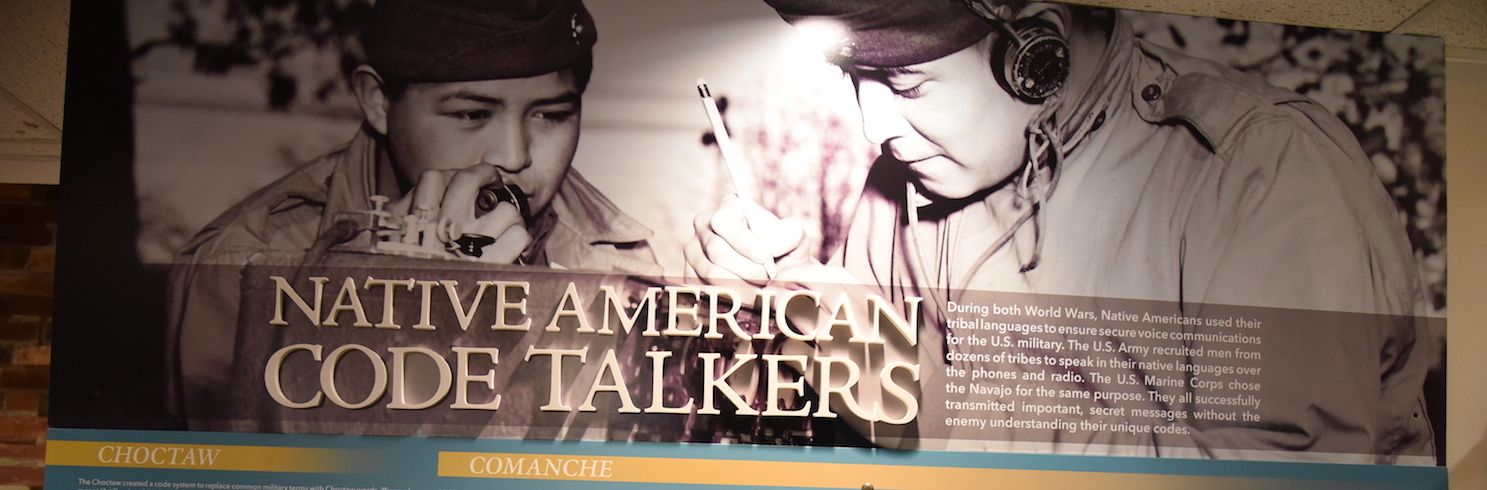
The Code Talker is the first and only memoir by one of the original Navajo code talkers of WWII. The book is dedicated to the 420 World War II Navajo Marine code talkers-- men who developed and implemented an unbreakable communications system that helped ensure the American defeat of the Japanese in the South Pacific. After the war, the code talkers were instructed to keep their role in the war secret-- the code was finally declassified in 1968, 23 years after the war's end. Chester Nez is now the last surviving member of the original 29 code talkers.
Their are any number of web sites that provide information on the code talkers but go to their official site as a start.

Book cover photo by Naval Institute Press
The Odyssey of the Codebreaker who outwitted Yamamoto at Midway is reviewed by Ronald Russel, Editor and Webmaster of the Midway Round Table with comments by CAPT Jim Fanell and RADM Donald "Mac" Showers. You can order the book from the Naval Institute Press.
Sensemaking is the inaugural book in a new NDIC Press series titled, The A. Denis Clift Series on the Intelligence Profession. The Clift Series will present original research on intelligence analysis and the teaching of intelligence. In 2009, A. Denis Clift concluded a 50-year career with the federal government. Clift was president of the National Defense Intelligence College from 1994 to 2009 and was instrumental in creating the Center for Strategic Intelligence Research, which houses the NDIC Press.
Sensemaking disaggregates, synthesizes, interprets, and communicates multiple perspectives of events, always entertaining new hypotheses, and all against the recognition that dramatic failure (or success) might occur at any moment. This bold, new proposal to make sensemaking a cornerstone for the improvement of Community intelligence practice makes an extraordinary contribution to the literature of intelligence.
Everyone may download a free electronic copy of this book from the NDIC website by going to http://www.ndic.edu/press/pdf/PCN23353.pdf. U.S. government employees may request a complimentary copy of this book by email at press@ndic.edu. The general public may purchase a copy from the Government Printing Office (GPO) at http://bookstore.gpo.gov/actions/GetPublication.do?stocknumber=008-000-01041-2
The show was loosely based on Herbert Osborn Yardley's book The American Black Chamber and it appears that Yardley and Tom Curtan may have been advisors to the show. The Black Chamber ran for 13 episodes before it was cancelled. One or more of the episodes were titled "Secret Ink."
Barnes and Noble Review
“Matthew Aid is an indefatigable researcher, poring over documents in government and private archives and conducting interviews with former officials of the National Security Agency. Aid also delivers excellent accounts of key battles and the role of SIGINT in supporting military maneuvers that were decisive in the Korean War, the Vietnam War, and the two engagements with Iraq. By the end of this work, the reader will have a much clearer idea of what the NSA does and how it accomplishes its mission, as well as insights about why the NSA needs to restructure itself so that in the future it will be able to accomplish more and do so with less resources.”
There is a lot on Matthew Aid on the internet. Google his name and you will find a wealth of information not only about The Secret Sentry but his other writings.
"{In this} taut, timely thriller 9800 Savage Road,, Harrigan has done what multiple Directors of NSA have been unable to do: put a human face on one of America's most secretive and most valuable intelligence organizations. M. E. Harrigan dishes up suspense, espionage and patriotism all in one serving."
-- Gen. Michael V. Hayden, U.S Air Force (ret), Director of NSA (1999-2005)
The letters sent back home by Sub-Lieutenant John Pryor from a German prison camp seemed innocent enough. They often started with 'My Dear Mummy & Daddy' and talked about mundane things such as gardening and a 'vegetable patch'. But the British wartime letters actually contained hidden messages, which have only now been deciphered by academics. It is the first time the captured serviceman's family has been able to understand the secret messages.
Sub Lt Pryor, pictured below, was captured at Dunkirk in 1940 and sent to a prisoner of war camp. Read more in the U.K Daily Mail.

Ron Brelsford sent a note to Dave D'Auria, our head of Acquisitons for the NCM, that noted: "As an appendix to my volunteer work in the Military Intelligence Service technical collection, I got hold of 50 unsolved German Enigma-messages, recovered a number of years ago from a German U-boat, sunk in Danish waters in the last days of WW2. At a conference in Germany in June for crypto historians I met a young German engineer who had tried in vain to solve old Enigma messages. He succeeded in solving almost all of mine, with a little help from me and an American Enigma-fan. That was a lot of fun, a lot of work, and a bit of a sensation. Anyone interested can find more on his website, Breaking German Navy Ciphers."
The Huntington Library, Art Collections and Botanical Gardens recently acquired at a private sale a long-unknown 150-year-old trove of handwritten ledgers and calfskin-covered code books, which give a potentially revelatory glimpse into both the dawn of electronic battlefield communications and the day-to-day exchanges between Abraham Lincoln and his generals as they fought the Civil War.
Tim Roberts has offered a viable solution to the Dorabella Cipher, an encrypted message sent by the celebrated English composer Edward Elgar to a young lady companion in 1897. Tim is on the Faculty of Arts, Business, Informatics and Education at CQ University Australia. The Dorabella cipher is listed on the site created by Elonka Dunin which provides an unofficial list of well-known unsolved codes and ciphers. Tim's solution can be found by clicking on this link to a PDF document.
In an article by John Markof on July 25, 2011, he discusses a finding by Steven Bellovin in the Library of Congress of a codebook that describes a technique called the one time pad. The codebook was published fully 35 years before its supposed invention during World War I by Gilbert Vernan.
A blog devoted to real unsolved historical code/cipher mysteries, as well as to exploring how those objects get portrayed in books, films, TV, radio, music, opera, sculpture, design, metalworking, eBay scams, etc. Find the latest on unsolved codes and ciphers such as the Voynich Manuscript, the Kryptos sculpture at CIA and many others. You can subscribe for free and receive daily alerts/updates.
A team of researchers made headlines for decoding a secret society's 18th century manuscript called the Copiale cipher. The Copiale Cypher - a mysterious cryptogram bound in gold and green brocade paper -- is a 250-year-old coded document that when decrypted uncovered the inner workings of an 18th-century secret society. The team of researchers is working to reveal the secret behind an even more mysterious undecrypted document, the Voynich Manuscript. Found in a chest of books outside Rome by a dealer in antique books, the Voynich Manuscript has remained one of history’s biggest mysteries: Its aging parchment is coated in alien characters and has for centuries mystified scientists.
During WWII, men and women working at Bletchley Park played a vital role, breaking the codes used by the German military. Nine years later, former codebreaker Susan is a housewife and mother, but she continues to recognize patterns that surround her in everyday life. When a series of women are brutally murdered around London, Susan sees a pattern emerging. However, when a police-search for what Susan believes to be an overlooked victim turns up nothing, she realizes she cannot solve this puzzle alone. Enlisting three former Bletchley Park colleagues: Millie, Lucy, and Jean; Susan knows they have little time to break this code before the killer strikes again. Their search for the answer has been made into a three-part murder mystery titled The Bletchley Circle and will premiere Sundays, April 21-May 5, 2013, 10:00-11:00 p.m. on PBS
On February 5, 1969 an EC-47Q code named CAP-72 left Plieku in South Vietnam on a reconnaissance mission with 10 crewman aboard and did not return. The crash site was visited by a Security Recovery Team that recovered 30 pounds of the possible 200 lbs of skeletal mass. The mortuary said there were only seven accounted for and there needed to be a return to the crash site to achieve a "Maximum Recovery". When the remains reached Dover, Delaware's mortuary the accounting of remains was listed as only five. These remains were interred at Jefferson Barracks in 1969 and a headstone listed the names of all 10 crewmen.
In 1995 JTF-FA (now JPAC) stumbled on the crash site and thought they had found a new previously unknown crash site. They found the dog tag of the co-pilot.of the EC-47 and more remains of the crew were recovered from the test pits. Another excavation of the site was scheduled for 1996. The remains recovered in 1995 are now either at Hickam AFB, HI or on their way to Offut AFB, NE for DNA analysis.
Maximum Recoveryin South East Asia (MRSEA), led by the son of one of the crewman, took ownership of driving the accounting for the crew of the EC-47Q and a Search and Recovery Mission was executed in December 2012 to Southern Laos.. It was during this mission when more remains of the crew were recovered and returned to the United States. These remains will be repatriated on May 25, 2013 in Olive Branch, MS. After repatriation the remains will be turned over to the Department of Defense for DNA analysis and identification. This event is open to the general public and everyone is invited to attend this seldom seen and memorable ceremony to honor and remember these heroes who made the supreme sacrifice for the liberties we enjoy.
The remains buried at Jefferson Barracks National Cemetery in Missouri were disinterred in February 2013 for DNA testing to try to determine which of the crew had been returned home but no results have been announced at this time.
It has been over 44 years since the families of the crewman lost their loved ones and many have not reached closure as to where their loved ones are located, dead or alive. They deserve better!
For current information on the repatriation ceremony visit the MRSEA Facebook page.
The five USAFSS members of the crew have been honored by their names be placed on the NSA's Memorial Wall.
For March 2013, the National Women’s History Project selected the theme, "Women Inspiring Innovation Through Imagination: Celebrating Women in Science, Technology, Engineering, and Mathematics." Among the 18 that were selected are: (1) Grace Hopper, a pioneering computer scientist and Rear Admiral in the navy who conceptualized COBOL, one of the first programming languages and (2) Jill Pipher, a mathematician, who has research interests in cryptography.
While Alan Turing has been justly celebrated in his centenary year, there were other brilliant codebreakers, says Ian Douglas. Read his article in the UK "The Telegraph" about the restoration work at Bletchley and some of the magnificent work done there during World War II. The photo below, from his article, shows women breaking codes at Bletchley.

In December 1862, Gen. Braxton Bragg, commander of the Confederate Army of Tennessee, was encamped around Murfreesboro, Tenn. Nearby, poised to attack him, was Union major general William S. Rosecrans’s Army of the Cumberland, headquartered just 35 miles away in Nashville. His telegraph operator, George A. Ellsworth, born in Canada, was only 19 years old, but he already had years of experience in his trade.
Using a pocket instrument that he attached to telegraph wires, Ellsworth immediately demonstrated a quick-witted ability to intercept messages, mimic operators on the line, absorb information and tap out false messages to federal commanders.
Read more about his exploits in this New York Times article.
Tucked away at Corry Station in Pensacola, Florida is a small museum chock full of artifacts that were once military secrets. The base is focused on training communication intelligence specialists for all branches of the military in numbers that range from 1,200 to about 2,000 at times. Former Navy Master Chiefs such as John Gustafson and Robert Anderson can give you an hour-plus tour of the espionage repository, known at Corry as the Cryptologic Command Display.
The University of Tulsa's Cyber Corps' program is training students to write viruses, hack networks, crack passwords and mine data. The little know course has been named as one of four "centers of excellence" and places 85 per cent of graduates with the NSA or CIA. Read more in the UK Daily Mail.
The University of Tulsa is one of several schools with outstanding cyber security credentials. In fact, there are more than 150 schools designated by the Department of Homeland Security and NSA as Centers of Academic Excellence in Information Assurance Education and Research, and the number is growing
The world’s oldest working digital computer (pictured below) has been brought back to life at Bletchley Park, Buckinghamshire. Witch, the machine’s nickname, is not the only British computer to make history. The UK has been at the forefront of this technological revolution. Go here to read about ten other British computers that changed the world.

It was part of a very special air service crucial to the D-Day landings. But a carrier pigeon dispatched by the invasion force to relay secret messages back across the Channel never made it home to its base.
Instead the bird got stuck in a chimney only to be discovered 70 years later, it's secret communique still attached to its skeleton in a red capsule.
The message is so secret that it is written in code long since forgotten by the security services.
Now the Government Communications Headquarter (GCHQ) in Cheltenham, Glos, is hoping to decipher the note in a bid to unravel the mystery.
Update 12/19/12)
A Canadian, using a WWI code book he inherited, claims to have deciphered the message.
Read the complete article by Richard Alleyne in The Telegraph, UK.
Austinite Helen Nibouar, 91, pictured below, a cryptographer during World War II, is headed to the National Cryptologic Museum near Washington, D.C., to be part of a program to be held on Wednesday, November 7, 2012 celebrating the National Security Agency's 60th Anniversary.
After working initially in Washington, Nibouar was sent to Morrison Field in West Palm Beach, Fla., where she met Marion Johnson, also a cryptographer and who also will be at Wednesday’s event. They became friends, but haven’t seen each other since the early 1960s.
Addition details can be found in the American Statesman article and in another article in the Scientific Military History.

Read the story about Maurice Ramon who graduated from Waco High School in 1967, joined the army to go to Vietnam, was recruited into the Army Security Agency, and, after training, was sent to Vietnam and assigned to the 25th Infantry’s 372nd radio research company at Cu Chi. Following his first tour in Vietnam, Ramon was stationed in Fort Hood and then Okinawa before returning to his unit in Vietnam for a final tour.
Decades after Nazi Germany's Enigma code was first cracked, Poland has gone on the offensive to reclaim the glory of a cryptological success it feels has been unjustly claimed by Britain. Frustrated at watching the achievements of the British wartime code breakers at Bletchley Park lauded while those of Poles go overlooked, Poland's parliament has launched a campaign to "restore justice" to the Polish men and women who first broke the Enigma codes.
Article by Jeffrey T. Richelson in the Airforce Magazine discusses how the supersecret 7500-series satellites for years soaked up Soviet communications, while most assumed they performed missile warning missions.
A team of European and American mathematicians and cryptographers have discovered an unexpected weakness in the encryption system widely used worldwide for online shopping, banking, e-mail and other Internet services intended to remain private and secure. Read the article in the New York Times.
William Penn Senior High School in York, Pa offers a cryptology course. As part of the course the students visit the NCM.
Lloyd Oliver, a resident of Glendale, Arizona was the second-to-last remaining Navajo Code Talker of the original group that designed an unbreakable oral code using their native tongue to confuse the Japanese during World War II. The last survivor, Chester Nez, lives in New Mexico.
Article on Alan Turing and his role in developing Colossus, the first practical electronic digital information processing machine in the world.
The article starts "It was an audacious double-cross that fooled the Nazis and shortened World War II. Now a document, here published for the first time, reveals the crucial role played by Britain's code-breaking experts in the 1944 invasion of France."
Read all about the decryption of the encrypted message in a sealed vial by visiting the following sites:
Article in Britains Daily Mail -
Audio interview with museums's collections manager, Catherine Wright -
Article in USA Today on November 11 about the Navajo Code Talkers efforts to build a museum and veterans center on the Navajo reservation in Arizona.
The last of the American Indian code talkers of South Dakota who served
during World War II has been laid to rest.
Clarence Wolf Guts of Wanblee was buried Tuesday in Black Hills National
Cemetery near Sturgis. The 86-year-old died June 16 at the South Dakota
Veterans Home in Hot Springs.
Wolf Guts was one of 11 Lakota, Nakota and Dakota code talkers from
South Dakota. During the war, they transmitted messages from an Army
general to his chief of staff in the field using their native language,
which the Germans and the Japanese could not translate.
For additional information, including a photo of Mr. Guts, see the article in The Moderate Voice.
As one of the first women admitted into the Navy in 1942, known as WAVES, Jimmie Lee Long worked as a code-breaker in a department that eventually became the National Security Agency. Hundreds of women served with her, their efforts classified and unsung for years. Read the article in the Star-Telegram.
Click on image for an expanded view!
An article written by General Michael Hayden, past Director of NSA and CIA and current member of the NCMF Board of Directors on The Future of Things "Cyber" is featured in the Spring 2011 edition of Strategic Studies Quarterly.
A photo of the Hebern electric code machine in actual use in a D.C. Western Union office in March 1923 has been placed on the Shorpy web site. The machine pictured is almost identical to the one on display in the NCM.

Harris & Ewing Collection glass negative
This massive hill was called Devil’s Mountain, or Teufelsberg in German. It was on Devil’s Mountain where the NSA built one of the largest and highly classified Listening Stations in the world to eavesdrop and spy, intercepting Soviet, East German and other countries’ communications. The station continued to operate until the fall of East Germany and the Berlin Wall. Yet after the station was closed, abandoned, and the equipment removed, the derelict buildings and radar domes still remained. The image below is of the station while still operational.
Click on image for larger view
Did you know about the Riverbank Laboratories, considered by some to be the direct lineal predecessor of the National Security Agency and Central Intelligence Agency? William Friedman began his career there in 1915 as the head of the Department of Genetics. Elizabeth Smith joined the Department of Ciphers at Riverbank in 1916. William and Elizabeth were married in May of 1917. Go to the Riverbank Laboratories web site for more information on the Labs history and the lives of William and Elizabeth Friedman.
The Tale of Two Airplanes, by Kingdon R. "King" Hawes, Lt. Col., USAF (Ret), is a great read with lots of fantastic pictures about the evolution of Rivet Ball and Rivet Amber, life for crew members on Shemya, and their missions out of Eielson AFB, Shemya, Alaska during the period 1966-1969.
"During World War II, as London burned and German submarines circled like sharks off the Atlantic Coast, the US Navy plotted a secret attack against the Nazis.
In a nondescript red-brick building in this sleepy Cape Cod town, the Navy converted a wireless radio receiving station into an intelligence hub that intercepted coded messages from German submarines and transmitted them to Washington, D.C., to be analyzed. The initiative, which ran from 1942 until the end of the war, employed nearly 600 sailors. But what went on inside the station was so secret that the naval archives has almost no information on it, and many longtime Chatham residents are just hearing about it now." Read the complete article by Laura Nelson, Globe Correspondent.
Nearly 60,000 books prized by historians, writers and genealogists, many too old and fragile to be safely handled, have been digitally scanned as part of the first-ever mass book- digitization project of the U.S. Library of Congress (LOC), the world's largest library. Anyone who wants to learn about the early history of the United States, or track the history of their own families, can read and download these books for free.
The digitized books can be accessed through the Library's catalog Web site and the Internet Archive (IA), a nonprofit organization dedicated to building and maintaining a free online digital library.
The Library of Congress has digitized many of its other collections - more than 7 million photographs, maps, audio and video recordings, newspapers, letters and diaries can be found at the Library's Digital Collections site.
More information is available from a Library of Congress video
At the General Membership Meeting in October 2011, Ambassador Bruce Laingen, who was one of the hostages held in Iran for 444 days and Mr. Kenneth Timmerman, author and investigative reporter, presented a panel discussion on International Relations with Iran, making a case for and against the value of conducting a dialogue with Iran.
Excerpts from the the discussion are available in three parts. Part 1 is 15 minutes long, Part 2 is also 15 minutes and Part 3 if 5 minutes.
Professor Craig Symonds, U.S. Naval Academy and Pat Weadon, NCM Curator discuss the Battle for Midway in this video.
If you have about 30 minutes, watch this clip which shows Pat briefing some of the NCM exhibits. Among the exhibits that Pat briefs is the Great Seal, presented to the Ambassador to the Soviet Union by Russian children one 4th of July. It was mounted in the Ambassadors office in Moscow and it was bugged!
When you have 44:49 minutes to spare, some of you might enjoy this video of a DES Panel discussion at the RSA. NSAs Dickie George, Whitfield Diffie, Martin Helman, Ronald Rivest, and Adi Shamir were on the panel
Read the article about these five computers, Including Harvest, on the Clearancejobs.com web site. The article notes that the intelligence community doesn't get enough credit for its contribution to the information age. This site is the largest online career resource for cleared professionals.
There is now a web site that is a virtual Vietnam wall of all of those lost during the war with names, bio's and other information on our lost heroes. Those who remember that time frame, or perhaps lost friends or family can look them up on the site.
Read the article on the history of the Berlin Tunnel on the Cold War Museum website. What has made the Berlin Tunnel famous, while the cable-tap tunnels of Vienna and Potsdam have faded into obscurity is the paradox of intelligence operations which results in fame being a measure of failure and obscurity being a measure of success. The Berlin Tunnel’s true claim to fame, therefore, is that it gained front-page notoriety when the Soviets “discovered” it.
Three air routes to West Berlin were established after the end of World War II to give the Western Allies air access to their garrisons in the former Nazi capital.
When the Soviet Union imposed its blockade in 1948, these air routes became famous as the vital corridors of the Berlin Airlift, which enabled the British and Americans to supply the beleaguered city. It is less well known that they were also, for 44 years, how the Allies collected intelligence on the densest concentration of Soviet military forces in the world.
The "Berlin for Lunch Bunch," as the aircrews called themselves, used three routes in operations for what was arguably the most important, longest lasting, and successful military reconnaissance program of the entire Cold War.
The site created by Elonka Dunin provides an unofficial list of well-known unsolved codes and ciphers. A couple of the better-known unsolved ancient historical scripts are also thrown in, since they tend to come up during any discussion of unsolved codes. There has also been an attempt to sort this list by "fame", as defined by a loose formula involving the number of times that a particular cipher has been written about, and/or how many hits it pulls up on a moderately-sorted web search.
The site hosted by Moshe Rubin is a clearing house for general information about Chaocipher. It presents fact, fiction and folklore about John Byrne's legendary invention.
- Last Updated - 5/11/2013
-5/18 - Armed Forces Day Celebration at the NCM
-Rare German book on Cryptology Acquired
-MD History Day & Milt Zaslow Award
-WWII POW Coded Letters Solved
-5/23 & 5/24/13 -Schorreck Memorial Lectures
-5/31/13 Spy Cruise on the Queen Mary II
-6/7/13-12th Annual Eagle Alliance Golf Tournament
Follow us on