





Joanne Perriens
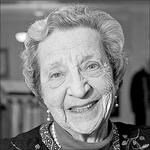
Joanne Perriens, of Rockville, MD, passed away quietly at her home surrounded by her family on Friday, December 23, 2016 after a long and courageous battle with breast cancer.
Joanne was born on September 14, 1930 in Boston, MA, to David and Bertha Bloom. Joanne attended Mount Holyoke College where she majored in Political Science. After graduation, she made her way to Washington, DC, to work for the Bureau of Indian Affairs. Soon thereafter, she began a long and successful 46-year career with the National Security Agency, where she rose to the senior ...
Debora Plunkett
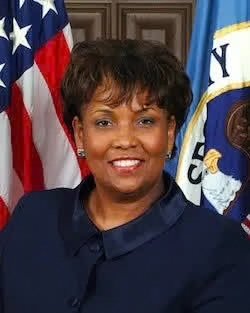
Debora Plunkett is a leader with more than 30 years of experience leading large, complex organizations. Culminating a career of U.S. federal service in 2016, she currently is Principal of Plunkett Associates LLC, a consulting business. She is a Senior Fellow at Harvard’s Belfer Center for Science and Technology and an Adjunct Professor of Cybersecurity in the University of Maryland’s Graduate School. She serves on the corporate boards of JCPenney, CACI International, and Nationwide Insurance. She is also a founding member and Chairman of the Board of Defending Digital ...
James W. Pryde, Sr.
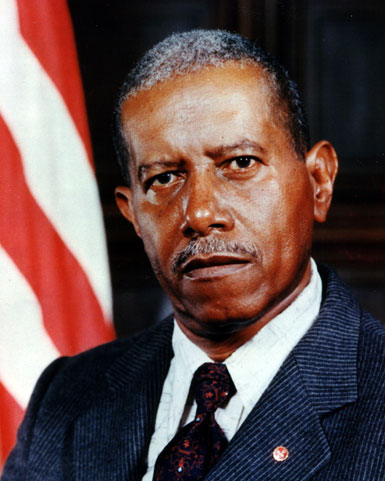
Mr. James W. Pryde Sr. joined the Army Air Corps and in 1944 entered aviation school. Instead of becoming a pilot, Mr. Pryde became a radio operator with WWII's famous Tuskegee Airmen. He then joined the Armed Forces Security Agency in 1950 as a communications clerk and was assigned to the mailroom. When it was discovered he could read automatic Morse tape, he was transferred to a signals analysis section, where he became a telemetry analyst.
Mr. Pryde then spent two years on detail to the staff of the Assistant Secretary of Defense. He served as the Director ...
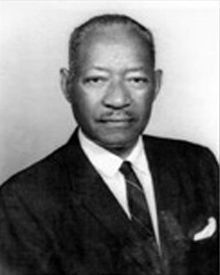
Bernard Pryor
Bernard W. Pryor is believed to be the first African-American hired by the Army’s Signal Intelligence Service. He had been a motorcycle messenger with the Navy Department when he began his career in 1939 as a messenger with Signal Intelligence Service. By mid-1943, Mr. Pryor was the senior messenger of 15 people. In 1944, he moved to the personnel department most likely to assist the African American employees who were being hired in increasing numbers. He remained in personnel until he retired in 1965.
Joseph Richard
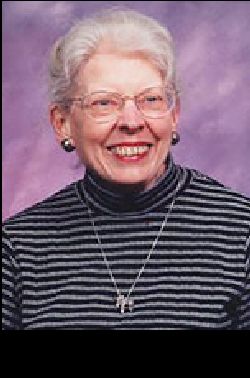
Virginia Jenkins Riley
The variety of Virginia Riley's accomplishments in four decades at NSA confirms her status as a consummate cryptologist: linguist, cryptanalyst, teacher, computer practitioner, researcher, and senior manager. To each role she brought intellect, imagination, and sensitivity.
A member of Phi Beta Kappa with degrees from Miami University of Ohio and Duke Ms. Riley began her career at NSA in 1953 as a linguist. She became a self-taught cryptanalyst and computer programmer -- well before NSA had curricula or infrastructure for computer-assisted analysis.
In the early 1960s, ...
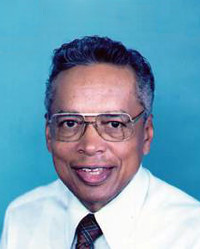
Carroll Robinson
Mr. Carroll Robinson was the National Security Agency’s first black engineer and first African American Senior Executive. He was hired by the NSA’s Research and Development organization to assist in building the Agency’s first in-house developed computer, ABNER 1. At the time, R&D was one of the few areas of the Agency where African Americans and their white coworkers worked side by side to further the NSA mission. He retired from the Agency as an office chief.
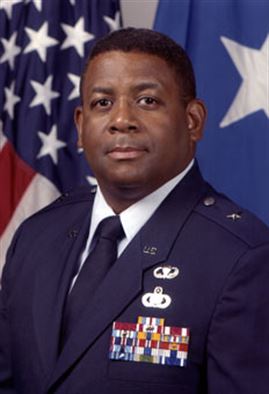
Brigadier General (USAF-Ret) Neal T. Robinson
Brig Gen Neal T. Robinson was an academic and civic leader in his youth, which led to an appointment to the USAF Academy in 1970. Following graduation, he became an intelligence officer serving in the toughest assignments in hot spots around the world: South Korea, Iran (where he was taken hostage during the 1979 crisis), Panama, Italy, and Germany. He did multiple tours in the Pentagon, Texas, and Maryland.
Neal was head of intelligence for European Command during the Kosovo War. He approached every job with total dedication and always produced effective ...
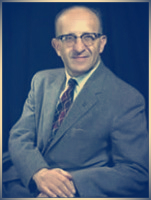
Dr. Abraham Sinkov
In 1930, William Friedman, a senior civilian in the Army's Signal Intelligence Service (SIS) was authorized to hire three civilians, at $2,000 per year -- a fairly good salary in the early period of the Great Depression. On April 1, Frank Rowlett, a mathematics teacher from Virginia, reported for duty. Later that month, two mathematics teachers from Brooklyn came to Washington to work as cryptanalysts, Abraham Sinkov and Solomon Kullback.
Abraham Sinkov, the son of immigrants from Russia, was born in Philadelphia, but grew up in Brooklyn. After graduating from Boys High School ...
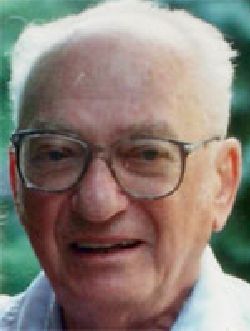
Samuel Simon Snyder
Samuel Snyder began his career as an "assistant cryptographic clerk" with the U.S. Army's Signal Intelligence Service in 1936. He was one of the first ten employees in that organization, which was a predecessor to NSA. During World War II, he led large teams that exploited Japanese army cryptosystems.
Noticing that use of sorting machines for cryptanalytic support was haphazard, Snyder suggested a more systematic approach to William Friedman, and Friedman tasked him with developing it. Snyder's innovations made special-purpose devices a strong asset in rapid ...
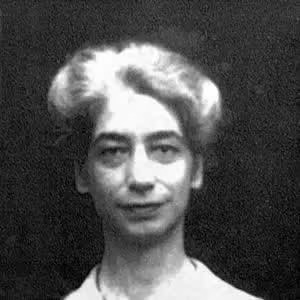
Dr. Julia Ward
As the founder of Central Reference, Dr. Julia Ward significantly affected the future of a key function across a wide variety of targets and problems. Her pioneering efforts to build a library of classified and unclassified resources to aid analysis greatly advanced the American cryptologic effort.
Dr. Ward was born in December 1900. She attended Bryn Mawr College, earning an Associate Bachelor's degree in 1923 and a Ph.D. in 1940. She was employed by Bryn Mawr from 1923 until she joined the cryptologic service during World War II. She held a variety of positions of increasing ...
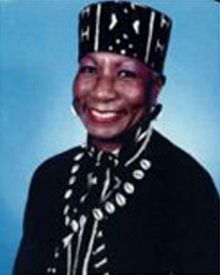
Wilhelmena Ware
Ms. Wilhelmena Ware began her career at the Agency in 1949 as a cardpunch operator. In 1952, she was promoted to a supervisory position and in that capacity taught a comprehensive keypunch course to the Agency’s first hearing impaired employees. Later, Ms. Ware became a computer science instructor in the National Cryptologic School and taught Introduction to Computer Systems Operations. Ms. Ware was promoted to Chief of the Learning Center where she was instrumental in instituting a number of programs, including the implementation of the sign language course. In 1980, ...