

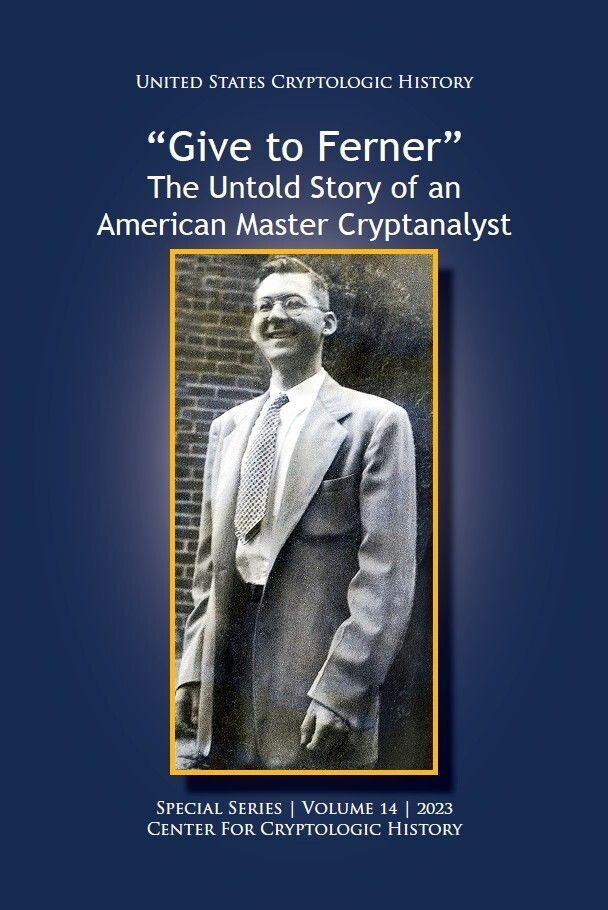
CCH booklet – “Give to Ferner” – The Untold Story of an American Master Cryptanalyst
“Give to Ferner” - The Untold Story of an American Master Cryptanalyst
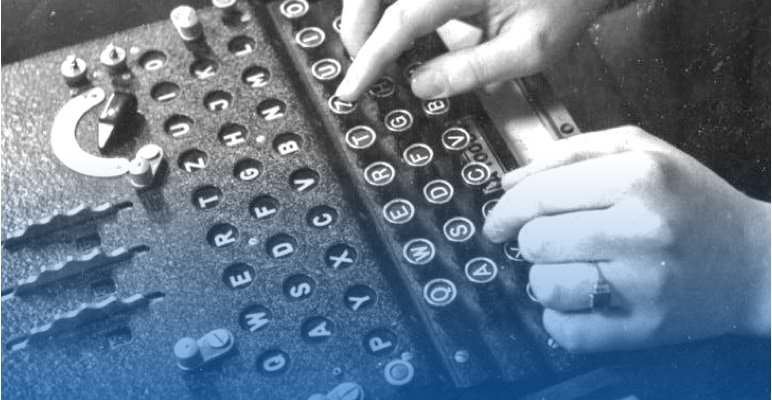
In 2023, the NSA’s Center for Cryptologic History (CCH) published the booklet, “Give to Ferner" - The Untold Story of an American Master Cryptanalyst, which features Robert O. Ferner and his noteworthy contributions to codebreaking (cryptanalysis) that have been lost to the vagaries of time and bureaucracy. A CCH historian discovered Ferner’s outstanding legacy while researching an ...
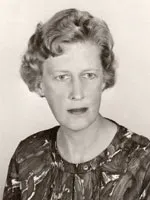
Vera Ruth Filby
Vera R. Filby, died at her home in Savage, MD, on 15 May 2007 at age 86. She had suffered from a stroke a few weeks earlier.
One of the near-legendary figures of NSA, linking its present to England’s WW II Bletchley Park, Mrs. Filby, widow of Bletchley Park veteran, historian and genealogist William “Bill” Filby, retired from NSA in 1994, having served for over 30 years.
Mrs. Filby's career began with service to the WAVES and the Navy's Cryptologic organization and culminated with years of contributions to NSA's National Cryptologic School, including ...
The Forgotten Female Programmers Who Created Modern Tech
Article excerpt below....
If your image of a computer programmer is a young man, there's a good reason: It's true. Recently, many big tech companies revealed how few of their female employees worked in programming and technical jobs. Google had some of the highest rates: 17 percent of its technical staff is female.
It wasn't always this way. Decades ago, it was women who pioneered computer programming — but too often, that's a part of history that even the smartest people don't know.
I took a trip to ground zero for today's computer revolution, Stanford ...
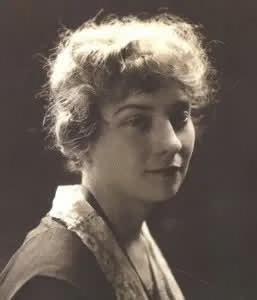
Elizebeth Smith Friedman
Elizebeth Smith Friedman is often referred to as the wife of cryptologist William Friedman. However, this female pioneer in code breaking was actually the one to introduce him to the field. In January 2021, PBS aired a special documentary about Elizebeth Smith Friedman, based upon the book "The Woman Who Smashed Codes" by Jason Fagone. Click on the links below to learn more.
Elizebeth Friedman was a wife, mother, writer, Shakespeare enthusiast, cryptanalyst, and pioneer in U.S. cryptology. She enjoyed many successes in cryptology in her own right and has been ...
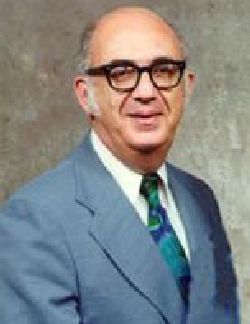
Jacob “Jack” Gurin
Jack Gurin was inducted in to the NSA Cryptologic Hall of Honor in 2007. The text included here is from his Hall of Honor page on the NSA website. Mr. Gurin passed away in 2004. His obituary is included further below on this page.
Jacob "Jack" Gurin, a graduate of New York University, has been described as "… a moving force… always… where the action was." Jack (or Jake) was a man of myriad dimensions and talents - a published translator of Tolstoy, a World War II Army captain who served as a Japanese translator and interpreter, and a Russian language analyst and ...
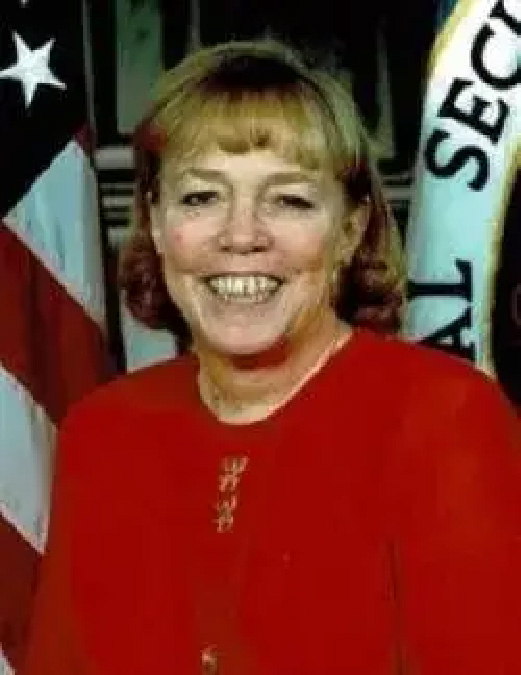
Lee Ellen Hanna
An alumna of the National War College, Lee became the first woman senior operations officer in the National SIGINT Operations Center before being promoted to the NSA’s senior executive level, including serving as deputy director of human resources and leading some of the Agency’s most mission-critical organizations.
As part of her responsibilities, Lee briefed presidents and addressed Congress, led several intelligence production organizations, chaired an NSA oversight panel on processes and management of the Agency’s personnel office, and worked closely with U.S. intelligence ...
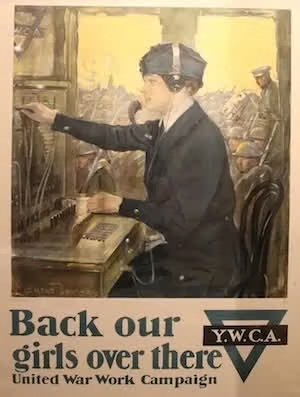
Hello Girls
We salute the “Hello Girls.”
Communication, in this case telephone lines, were crucial to planning and coordinating military campaigns. In World War I, men of Army’s Signal Corps constructed telephone lines along the front, but proved lacking as operators. Professional telephone operators were needed to connect the calls between major entities of the Allied effort, working even on the “fighting lines.”
The Army turned to the professional women operators in the United States. Not only were these women expected to be experienced telephone operators, they also needed to ...
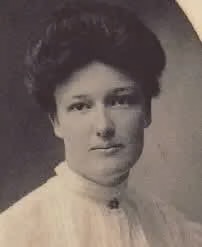
Genevieve Young Hitt
Genevieve Young Hitt (1885-1963) - As a young Texas debutante, Ms. Hitt probably never suspected she would one day be described as "the U.S. Government's first female cryptologist."
She likely developed an interest in cryptology alongside her husband, Colonel Parker Hitt. Ms. Hitt demonstrated a clear knack for cipher work and aside from a brief visit to Riverbank Laboratories, was self-taught. She initially deciphered messages without salary and in 1918 became a salaried Army employee, performing code work for $1,000 per year. She has also been credited with ...
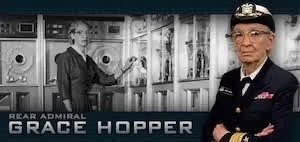
Grace Murray Hopper
At the age of seven, she was already taking apart alarm clocks, determined to figure out how they worked. Often deemed “The Queen of Code,” Grace Hopper was an American computer scientist and United States Navy rear admiral.
A pioneer in the field, she was one of the first programmers of the Harvard Mark I computer in 1944, and invented the first compiler for a computer programming language. She popularized the idea of machine-independent programming languages, which led to the development of COBOL, one of the first high-level programming languages. She is credited with ...
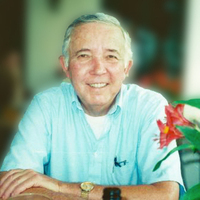
Ronald L. Hunt
Ronald Lloyd Hunt of Gambrills, Maryland, died at home on 21 April, 2020. He was 77 years old.
Ron was the son of Lloyd Schaal Hunt and Edith Pauline Cowen Hunt. He was born in Fort Morgan, Colorado, on 10 December 1942. Ron attended Denver-area high schools, and went to the University of Colorado at Boulder as a member of the Superior Student Program. He worked as a meat cutter in the summers and on weekends, and enjoyed playing golf at dawn before work.
In early 1965 Ron went to Maryland and began what was to become a legendary and ...
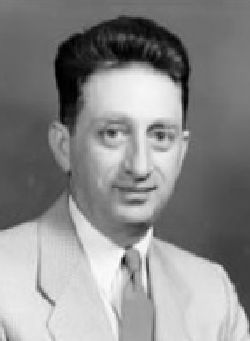
Dr. Sydney Jaffe
For 31 years, Dr. Sydney Jaffe played a seminal role in building the institutional and intellectual foundations that have guided language work at NSA. His own career, both as a philologist-linguist and as a linguist-manager, served to inspire other linguists.
Jaffe earned an M.A. and Ph.D. in French at Harvard. He entered the Army cryptologic services in 1941, made the transition to civilian status at the end of World War II, and served with the Armed Forces Security Agency and NSA.
One of Jaffe's lasting legacies was his central role in ...