





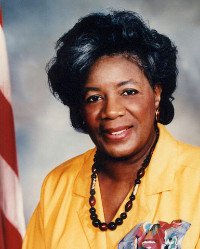
Minnie McNeal Kenny
Minnie McNeal Kenny served as a civilian for 43 years. She joined NSA as a communications clerk at the GS-4 level, higher than the starting grades offered to African Americans at the time. She was an expert in the fields of language, cryptanalysis, and traffic analysis. Throughout her tenure, she worked to further the cause of minorities at NSA. Her legacy was not only in the impressive changes she effected in NSA structure, policy, and practice, but in the inspiration she was to all NSA employees, regardless of race, giving them faith that they could effect ...
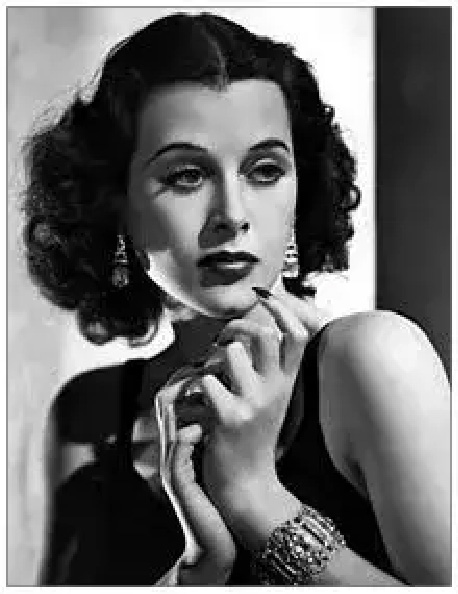
Hedy Lamarr
Well known for her role as a movie star and a beauty icon, Hedy Lamarr is less well known for her invention of spread spectrum technology. By manipulating radio frequencies at irregular intervals between transmission and reception, the invention formed an unbreakable code to prevent classified messages from being intercepted by enemy personnel. Needless to say, this achieved great things for U.S. military ships, but it also served as a basis for modern spread-spectrum communication technology, such as Bluetooth, COFDM (used in Wi-Fi network connections), and CDMA (used in some ...

Ada Lovelace
Ada Lovelace (Augusta Ada Byron, Countess of Lovelace) – (1815-1852) The daughter of famed poet Lord Byron, Ada Lovelace was a gifted mathematician and is credited with having written instructions for the first computer program. While translating an article for Charles Babbage about Babbage’s engine, she added her own notes and ideas which ended up being much longer than the original article. In her article, she described how codes could be developed to handle letters and symbols, as well as numbers. She also theorized a method for the device to repeat a series of ...
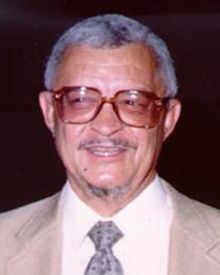
Charles Matthews
Charles Matthews, a lifelong Washington resident, became the first student at Hilltop Radio-Electronics Institute, a black-owned electronics school open to African-Americans in Washington, D.C. After graduating, he was hired in 1948 by the Army’s cryptologic service at Arlington Hall. As an engineering technician, he worked in the Research and Development organization. Even though his white counterparts, with equal or less experience, received better pay, his $2,100 salary was better than most African-Americans were earning in other positions in the National Security ...
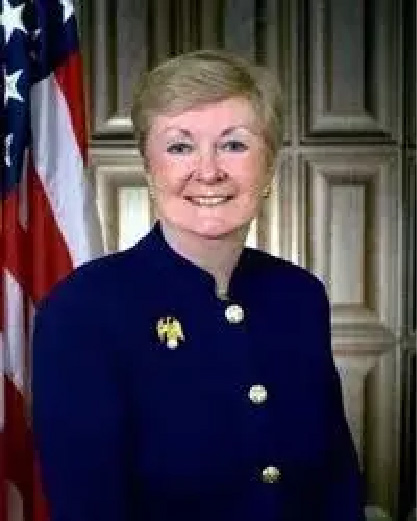
Barbara McNamara
Barbara McNamara demonstrated extraordinary leadership qualities in advancing NSA’s mission, enhancing cooperation with other US agencies, and developing foreign partner relations. She began her career as a Chinese Linguist and served in several analytic, operational, and managerial positions at the National Security Agency (NSA).
In 1994, she became the first woman to be Deputy Director of Operations, and in 1997, she reached the highest civilian position at NSA when she was named the Agency’s Deputy Director. In 2000, she became the first woman to hold the ...
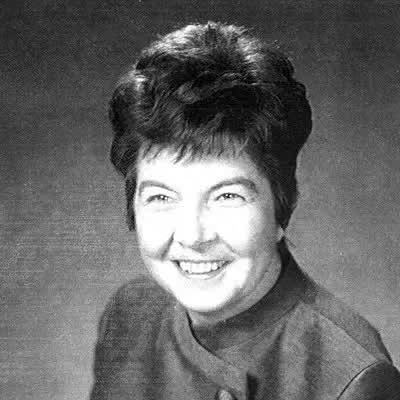
Juanita Moody
In early 1943, Juanita Morris, at a small college in North Carolina, wished to contribute to the war effort and volunteered at the nearest recruiting office. By April, she was at the Army cryptologic headquarters at Arlington Hall Station. While awaiting her security clearance, the Signal Security Agency (SSA) put her into unclassified training in cryptanalysis; she became fascinated with the subject.
At the end of the war, her supervisor asked her to stay on, rather than be demobilized, and she agreed. In 1948, she married Warren Moody, a non-cryptologic ...
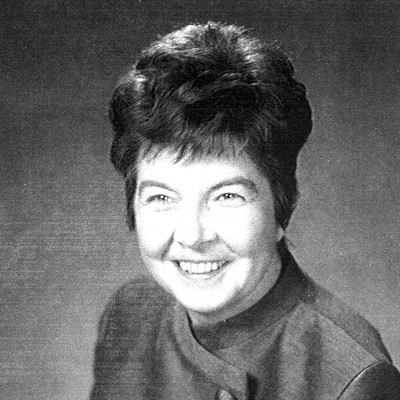
Juanita M. Moody
Juanita M. Moody, 90 of Pawleys Island, SC died Tuesday, February 17, 2015. Ms. Moody had retired from the National Security Agency in 1976 after a distinguished career of more than 30 years of service.
Her husband, William Warren Moody, a sister, Nan Morris Jacobson and a brother, Robert Bennett Morris all preceded her in death. Surviving are brothers, Joseph L. Morris (Syl) of New Bern, NC, Henry L. Morris (Linda) of Cheraw, SC; sisters, Sue Morris Gilbert of Millsboro, DE, Virginia Morris Marsh (Joe) of Cheraw, SC and Adgie Morris James of ...
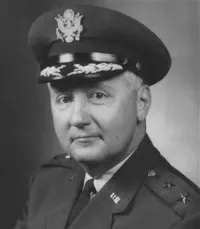
Maj. Gen. John E. Morrison, Jr. USAF (Ret)
John E. Morrison Jr.was born on April 20, 1918 in Baltimore and graduated from the University of Baltimore in 1939 with a Juris Doctor degree. He graduated from the Air Command and Staff College in 1949 and from the Air War College in 1959.
Maj Gen Morrison was a member of the Board of Directors of the National Historical Intelligence Museum; founder, past president, and Chairman of the Board of the National Cryptologic Museum Foundation; and a member of the Joint Military Intelligence College Foundation Board. He was also a Phoenix Society Distinguished ...
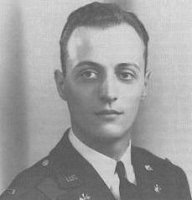
Paul E. Neff, COL (USAR Ret.)
Paul E. Neff, COL (USAR Ret.) died in May 2005 at 88. He was a civil engineer for the Federal Power Commission when he was drafted in March 1941 and assigned to the office of the Chief Signal Officer in the Munitions Building in Washington, DC.
His wartime service took him to England, and later France and Germany, providing signals intelligence support to the European Theater of Operations. Among other things, he sought out German cryptologists in the spring of 1945, gaining information that proved valuable in the work on Soviet war- time espionage.
He ...
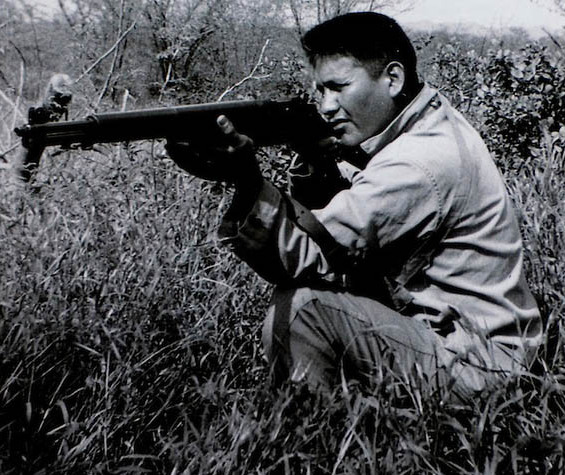
Chester Nez – Code Talker
In 2012, we first wrote about Chester Nez.
"Code Talker," by Chester Nez with Judith Schiess Avila became the first and only memoir by one of the original 29 Navajo code talkers of WWII. The book was dedicated to the 420 World War II Navajo Marine code talkers -- men who developed and implemented an unbreakable communications system that helped ensure the American defeat of the Japanese in the South Pacific. You can read an excerpt of Code Talker on Judith Avila's ...
Helen M. O’Rourke
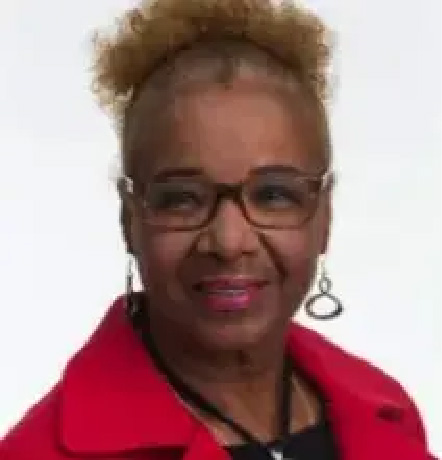
Dr. Loyce Pailen
Dr. Loyce Pailen, a doctor of management and senior director of the Center for Security Studies at University of Maryland Global Campus (UMGC), has more than 35 years of experience in information technology, including work in cybersecurity, software development, project management, telecommunications, risk management, and network and systems security and administration. She has held director-level information technology positions at the Washington Post, Graham Holdings, UMGC, and as a contractor at Computer Sciences Corporation for the Defense Cyber Investigations Training Academy ...