

Explore upcoming events from across the Foundation – See Calendar

O
X

About Us

About Us

Advancing cybersecurity awareness, education, and innovation for a safer digital world.

Our Team

Meet the leaders and visionaries driving the NCF's mission forward every day.

FAQs

Find quick answers about our mission, membership, and how to get involved.

Our History

From codebreakers to cyber defenders — preserving a legacy that shapes the future.

NCF Financial Data

Review audited reports and filings that reflect our commitment to transparency, accountability, and responsible stewardship.

Newsletter Archive

Browse past issues of our e-newsletter and explore our early years through issues of the Foundation’s original hard-copy newsletter, The Link.

Our Partnerships

Dedicated and talented organizations that have provided invaluable assistance to the NCF to help us achieve our goals. 

nav about us group of professionals in conversation

More Than a Mission — A Movement

The NCF brings together educators, experts, and enthusiasts who believe in building an informed, cyber-safe future.

Programs & Events

All Programs

Explore all of the NCF's programs driving cyber awareness, education, and history forward.

30th Anniversary

Celebrating a milestone year for the Foundation!

Artificial Intelligence (Convening to Act)

Convening experts to explore both the opportunities and challenges of AI in national security.

Quantum-Resistant Cryptography (Convening to Act)

Convening specialists to help speed the transition to quantum-safe systems nationwide.

XFIL - CNO (Convening to Act)

Gathering leaders and specialists to discuss advancements in building strong and secure CNO capabilities.

Summit on Cybersecurity Education (Convening to Act)

Helping stakeholders share ideas, form partnerships, and prepare the next generation for a secure digital future.

Student Ambassador Program

Catalyzing strategic dialogue on emerging cyber & cryptologic challnges in partnership with NSA

Cyber Saturday

A full-day, interactive event for youth and families to explore cybersecurity through play.

Crypto Cup

A signature fundraiser merging sport and mission — advancing cryptologic education through golf.

Cocktails & Codebreakers

A celebratory evening honoring cryptologic legacy, networking, and thought leadership.

Cyber Feud

A live, fast paced competition where students test cyber knowledge in game show format.

Escape Room

Hands-on puzzle challenge: crack codes, solve clues, experience real-time cryptologic logic.

nav programs and events three students learning together

Events That Build a Cyber-Safe Future

The NCF programs spark growth, foster collaboration, and make cybersecurity a shared mission across generations and industries.

Resources

Cybersecurity Curriculum Guidelines

Guidelines that support creating cybersecurity-focused lessons and inspire students to pursue cyber careers.

How to Be Cyber Safe + Savvy — A Data Care Booklet for Adults

Clear, practical steps to protect their devices, data, and privacy from today's online threats.

Downloads

Access classroom-ready lessons, tools, and activities to teach cryptology, cybersecurity, and digital citizenship.

Insights & Updates

Explore thought leadership, event recaps, and the latest news from the world of cryptology and cyber education.

Outsmart Cyberthreats Collections

Clear, engaging resources that build foundational cyber safety skills through activities and practical guidance.

Podcast Series

Listen to #CyberChats and Cyber Pulse — the NCF's two podcasts exploring stories, insights, and innovations shaping cybersecurity.

Cyber Games

Engaging students through interactive challenges that build real-world cybersecurity skills and teamwork.

nav resources two young students learning on laptop

Empowering the Next Generation of Cyber Thinkers

Through resources, stories, and shared knowledge, the NCF helps educators, professionals, and students strengthen our cyber future together.

Cryptologic History

Trailblazers

Discover the pioneers who broke barriers and paved the way for future generations in cryptology.

Historical Figures in Cryptology

Meet the brilliant minds whose work in codes and communication shaped global history.

Cryptologic Bytes

Dive into quick reads and fascinating facts that reveal hidden history of code communication.

Commemorate

Honor the people and achievements that advanced the art and science of cryptology.

Acquisitions Archive

Explore rare artifacts, documents, and exhibits preserved to tell the evolving story of cryptology.

NSA/CSS Cryptologic Hall of Honor

Celebrate individuals whose exceptional contributions strengthened our nation's intelligence security.

nav cryptologic history hands using engima machine

Preserving the Code of Our Past

From hidden messages to historic breakthroughs, the NCF keeps the stories of cryptology alive—honoring the people, events, and innovations that shaped modern intelligence.

Support Us

Join or Renew Membership

Memberships fuel our efforts to expand programs, support students, families, & educators, and preserve the rich history of cryptology.

Partnership Opportunities

Organizations partner with the NCF to further our shared goals for community education, innovation, engagement, and more.

Donate

Support our mission-driven goals and initiatives with a one-time or recurring donation. Designate your donation for a specific program or campaign.

Other Ways to Donate/Support

Explore more options for supporting our mission to educate, engage, and commemorate.

Sponsorship Opportunities

NCF events offer a variety of sponsorship levels & benefits. View upcoming events for options.

Ambassador Program Sponsorship

Our Ambassador Program offers ongoing support opportunities.

Tribute Donations

Make a gift in memory or in honor of a loved one, colleague, or friend. Our In Memoriam Registry and Panel are additional options for honorees who worked in the cryptologic field.

teacher speaking to classroom

Support the Mission. Shape the Future.

Help to advance cybersecurity awareness & education, preserve cryptologic history, and inspire innovation for a safer digital world.

Explore upcoming events from across the Foundation – See Calendar

About Us

About Us

About Us

Advancing cybersecurity awareness, education, and innovation for a safer digital world.

Our Team

Meet the leaders and visionaries driving the NCF's mission forward every day.

FAQs

Find quick answers about our mission, membership, and how to get involved.

Our History

From codebreakers to cyber defenders — preserving a legacy that shapes the future.

NCF Financial Data

Review audited reports and filings that reflect our commitment to transparency, accountability, and responsible stewardship.

Newsletter Archive

Browse past issues of our e-newsletter and explore our early years through issues of the Foundation’s original hard-copy newsletter, The Link.

Our Partnerships

Dedicated and talented organizations that have provided invaluable assistance to the NCF to help us achieve our goals. 

nav about us group of professionals in conversation

More Than a Mission — A Movement

The NCF brings together educators, experts, and enthusiasts who believe in building an informed, cyber-safe future.

Programs & Events

Programs & Events

All Programs

Explore all of the NCF's programs driving cyber awareness, education, and history forward.

30th Anniversary

Celebrating a milestone year for the Foundation!

Artificial Intelligence (Convening to Act)

Convening experts to explore both the opportunities and challenges of AI in national security.

Quantum-Resistant Cryptography (Convening to Act)

Convening specialists to help speed the transition to quantum-safe systems nationwide.

XFIL - CNO (Convening to Act)

Gathering leaders and specialists to discuss advancements in building strong and secure CNO capabilities.

Summit on Cybersecurity Education (Convening to Act)

Helping stakeholders share ideas, form partnerships, and prepare the next generation for a secure digital future.

Student Ambassador Program

Catalyzing strategic dialogue on emerging cyber & cryptologic challnges in partnership with NSA

Cyber Saturday

A full-day, interactive event for youth and families to explore cybersecurity through play.

Crypto Cup

A signature fundraiser merging sport and mission — advancing cryptologic education through golf.

Cocktails & Codebreakers

A celebratory evening honoring cryptologic legacy, networking, and thought leadership.

Cyber Feud

A live, fast paced competition where students test cyber knowledge in game show format.

Escape Room

Hands-on puzzle challenge: crack codes, solve clues, experience real-time cryptologic logic.

nav programs and events three students learning together

Events That Build a Cyber-Safe Future

The NCF programs spark growth, foster collaboration, and make cybersecurity a shared mission across generations and industries.

Resources Code

Resources

Cybersecurity Curriculum Guidelines

Guidelines that support creating cybersecurity-focused lessons and inspire students to pursue cyber careers.

How to Be Cyber Safe + Savvy — A Data Care Booklet for Adults

Clear, practical steps to protect their devices, data, and privacy from today's online threats.

Downloads

Access classroom-ready lessons, tools, and activities to teach cryptology, cybersecurity, and digital citizenship.

Insights & Updates

Explore thought leadership, event recaps, and the latest news from the world of cryptology and cyber education.

Outsmart Cyberthreats Collections

Clear, engaging resources that build foundational cyber safety skills through activities and practical guidance.

Podcast Series

Listen to #CyberChats and Cyber Pulse — the NCF's two podcasts exploring stories, insights, and innovations shaping cybersecurity.

Cyber Games

Engaging students through interactive challenges that build real-world cybersecurity skills and teamwork.

nav resources two young students learning on laptop

Empowering the Next Generation of Cyber Thinkers

Through resources, stories, and shared knowledge, the NCF helps educators, professionals, and students strengthen our cyber future together.

Cryptologic History

Cryptologic History

Trailblazers

Discover the pioneers who broke barriers and paved the way for future generations in cryptology.

Historical Figures in Cryptology

Meet the brilliant minds whose work in codes and communication shaped global history.

Cryptologic Bytes

Dive into quick reads and fascinating facts that reveal hidden history of code communication.

Commemorate

Honor the people and achievements that advanced the art and science of cryptology.

Acquisitions Archive

Explore rare artifacts, documents, and exhibits preserved to tell the evolving story of cryptology.

NSA/CSS Cryptologic Hall of Honor

Celebrate individuals whose exceptional contributions strengthened our nation's intelligence security.

nav cryptologic history hands using engima machine

Preserving the Code of Our Past

From hidden messages to historic breakthroughs, the NCF keeps the stories of cryptology alive—honoring the people, events, and innovations that shaped modern intelligence.

Support Us

Support Us

Join or Renew Membership

Memberships fuel our efforts to expand programs, support students, families, & educators, and preserve the rich history of cryptology.

Partnership Opportunities

Organizations partner with the NCF to further our shared goals for community education, innovation, engagement, and more.

Donate

Support our mission-driven goals and initiatives with a one-time or recurring donation. Designate your donation for a specific program or campaign.

Other Ways to Donate/Support

Explore more options for supporting our mission to educate, engage, and commemorate.

Sponsorship Opportunities

NCF events offer a variety of sponsorship levels & benefits. View upcoming events for options.

Ambassador Program Sponsorship

Our Ambassador Program offers ongoing support opportunities.

Tribute Donations

Make a gift in memory or in honor of a loved one, colleague, or friend. Our In Memoriam Registry and Panel are additional options for honorees who worked in the cryptologic field.

teacher speaking to classroom

Support the Mission. Shape the Future.

Help to advance cybersecurity awareness & education, preserve cryptologic history, and inspire innovation for a safer digital world.

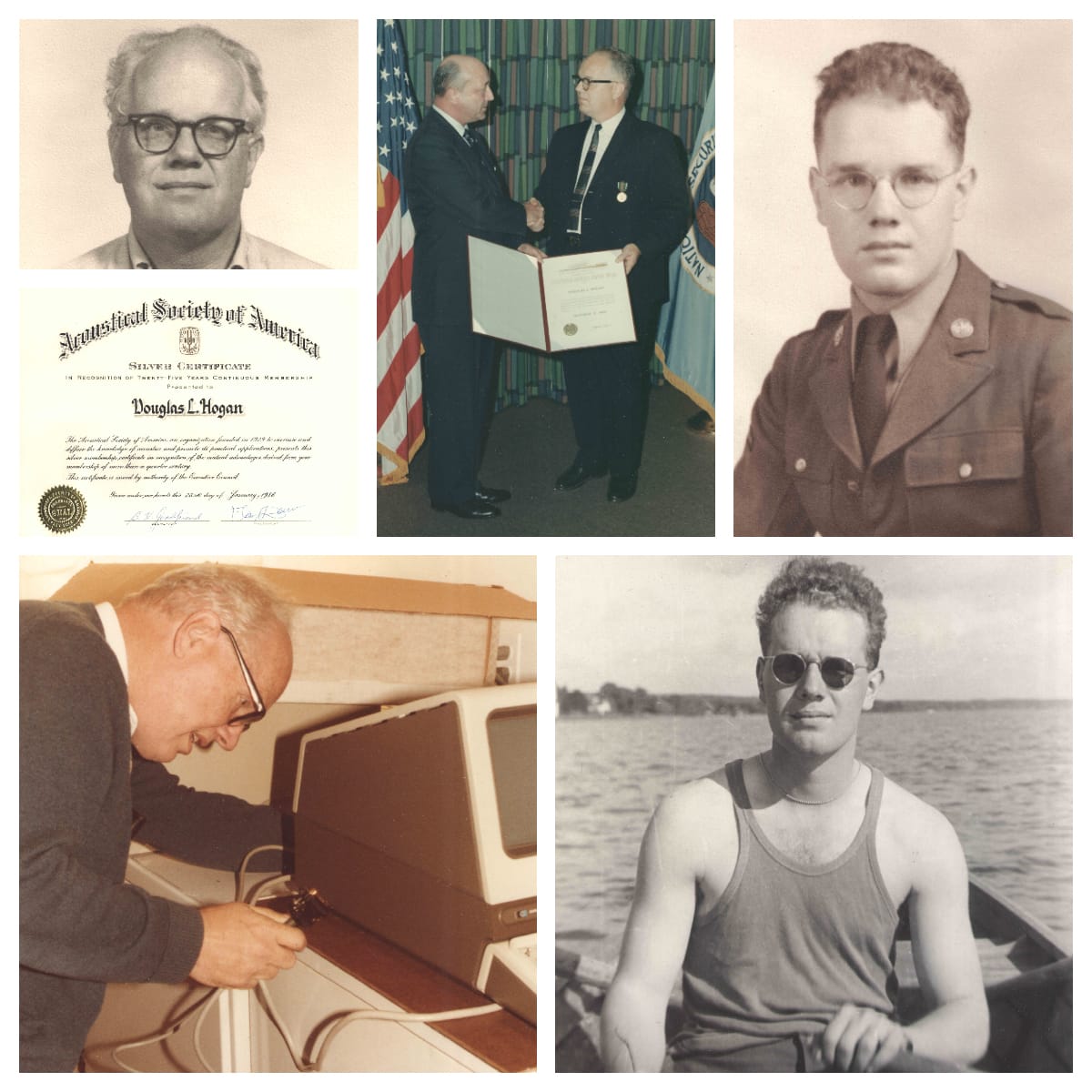
Douglas Hogan - collage
Cryptologic History:

Douglas Hogan

1924-1986

Registry Sponsor(s): Douglas Price

Doug instituted early speech research programs at NSA, and the expertise developed within his speech research laboratory enabled the Agency to evaluate research performed by its contractors and the speech community at large. Doug initiated and expanded policies that led to the participation of NSA scientists at professional and scientific meetings. Click on the collage image for a larger view.

Obituary

Douglas L. Hogan passed away on December 19, 1986 at the age of 62. Mr. Hogan was a retired electronics engineer formerly assigned to Research and Engineering.

Mr. Hogan was born to American parents in Tsinan, China on December 14, 1924. After the 1932 China and Japan military conflict in Shanghai, China, where his father was teaching for the Chinese government, his family returned to the United States in May 1932. His family came to the Washington area in 1936.

Starting in March 1943, Mr. Hogan served with the US Army during World War II. After basic and advanced training, he was assigned to the Advanced Army Specialized Training Program (studying engineering) at Penn State. In June 1944 he was assigned to 71st Infantry Division at Fort Benning, Georgia. After serving 15 months in Europe with the US Third Army, he was discharged in April 1946.

Mr. Hogan received a BS in Mathematics from the George Washington University in 1950. He received an MSEE from the Massachusetts Institute of Technology in 1954 and an additional Electrical Engineer degree from MIT in 1961.

Upon discharge from the Army, Mr. Hogan returned to work at the National Bureau of Standards. Beginning in February 1948, he started work as an electronics engineer with the Department of Defense. He served as a co-author for the 1971 National Academy of Sciences/National Research Council’s Report Research on Speaker Verification. Mr. Hogan was a 1968 recipient of the Exceptional Civilian Service Award. Mr. Hogan retired from NSA in 1976 after 28 years of Federal service.

Following his retirement, Mr. Hogan did consulting work in the fields of computer security, speech, and communications. He was the Study Director for the 1979 National Academy of Sciences/National Research Council’s Report On the Theory and Practice of Voice Identification. In 1983, he joined Sparta, Inc. as a Senior Scientist.

A Silver Spring, Maryland resident, Mr. Hogan belonged to the Acoustical Society of America and the Association for Computational Linguistics. Reprinted below with permission is a memoriam from The Journal of the Acoustical Society of America that provides a more detailed tribute to his career and his nature by two of his friends and colleagues.

A member of Glenmont Methodist Church, he was survived by his wife, Patricia, daughter, two sons, brother, and five grandchildren.

Memorial Tribute of Douglas L. Hogan from the Acoustical Society of America

​Douglas L. Hogan, a long-time member of the Society, died after a heart attack on 19 December 1986. He had been a senior scientist with Sparta, Inc. since 1983. He spent the major part of his technical career with the National Security Agency (NSA), retiring in 1976. In 1976-1977 he was a study director for the National Academy of Sciences/National Research Council.

Doug was born in China to American parents who came to the Washington, DC area in 1936. He served with the United States Army in Europe during World War II, then earned a bachelor’s degree in mathematics at George Washington University and master’s and EE degrees from MIT. His 1961 thesis, “Automatic Recognition of a Limited Set of Syllables,” is an early example of speech research using digital techniques. In 1968 he received the Exceptional Civilian Service Award, the highest honor granted by the National Security Agency.

Doug Hogan’s significant contributions to speech research and digital computation may be fully recognized by only a small coterie of workers at NSA because Doug was a quiet self-effacing man, the compete civil servant who underplayed his role in management and in R&D. In addition, he was a representative of an agency that not only did not seek public recognition, but for many years tried to avoid public scrutiny.

At NSA Doug was first a member of the Mathematical Research Division, and soon specialized in designing special-purpose electronic devices for analytical problems. Later a Computer Research Division was split from the Mathematical Research Division, and Doug became its first chief. After a fellowship at MIT he returned to the newly formed Speech Research Division and in 1962 became its chief. Later Doug was a member of the Communications Security Division, working on problems of bulk encryption of telephone channels.

Doug instituted some early speech research programs at NSA and worked tirelessly to ensure cross-fertilization with speech research in industry and on the college campus. He employed individual industrial and academic researchers as consultants to NSA, and funded early work on word recognition/spotting, talker recognition, etc., at Haskins Laboratories, Purdue University, SCRI, UCLA, and other places. To support speech synthesis in research he provided Holmes-Mattingly formant synthesizers to a large number of academic and industrial speech laboratories.

The expertise developed within Doug’s speech research laboratory enabled the Agency to evaluate research performed by its contractors and the speech community at large. Through his consultants Doug became acquainted with the major research centers, meeting active researchers and studying their work. His in-house research staff was responsible for important early work (mostly classified) on talker identification.

Within NSA Doug initiated and expanded policies that gradually led to the participation of NSA scientists at professional and scientific meetings. Doug, with the help of his colleagues, convinced his management that involvement with the Acoustical Society and similar groups is a legitimate part of the activities of a government scientist. He joined the Acoustical Society in 1961, was on the Technical Committee on Speech Communication from 1968 to 1974, serving as its chairman and on the Technical Council during 1971-73. He also served on CCEA from 1971 to 1978.

While on the Technical Committee on Speech Communication, Doug introduced the idea that the committee served academia, industry, and government equally, and that the committee membership should reflect those interests, a principle followed since. During his chairmanship the difficult and delicate issue arose of using so-called “voiceprints” as legal evidence, which Doug handled to the satisfaction of the Society and the speech community. Later he served as Executive Secretary to a NSA committee studying this forensic issue.

Doug’s interests, capabilities, and efforts were equally effective in the field of digital processing. As a pioneer in the design and use of computers, he built in the early 1950’s a relay computer to test algorithms. In 1951 he collaborated in the design of the ERA-1101. The company that built this computer for NSA became part of Sperry-Rand and eventually evolved into Control Data Corporation. Doug also built what was probably the first real-time input (Morse code) to a computer – a CDC-160. He may have been the first to put direct speech A/D conversion on a computer (BOGART). He was responsible, in part at least, for the application of computers to many practical problems of speech processing.

The accomplishments we are attributing to Doug Hogan might suggest a person with a driving ambition and forceful mien, but Doug was unassuming and nondirective to a fault. On only one topic was he didactic and quick to pass judgment – the quality of Chinese cuisine! The Acoustical Society and all persons involved in speech research and digital applications have lost a valuable and fine ally. We mourn our friend and colleague.

A.S. House
Institute for Defense Analysis (CRD)

E.P. Neuburg
National Security Agency

Reproduced from The Journal of the Acoustical Society of America 82, 715 (1987), with the permission of the Acoustical Society of America. Click to view the article via the Journal’s website.