



Explore upcoming events from across the Foundation – See Calendar

O
X

About Us

About Us

Advancing cybersecurity awareness, education, and innovation for a safer digital world.

Our Team

Meet the leaders and visionaries driving the NCF's mission forward every day.

FAQs

Find quick answers about our mission, membership, and how to get involved.

Our History

From codebreakers to cyber defenders — preserving a legacy that shapes the future.

NCF Financial Data

Review audited reports and filings that reflect our commitment to transparency, accountability, and responsible stewardship.

Newsletter Archive

Browse past issues of our e-newsletter and explore our early years through issues of the Foundation’s original hard-copy newsletter, The Link.

Our Partnerships

Dedicated and talented organizations that have provided invaluable assistance to the NCF to help us achieve our goals. 

nav about us group of professionals in conversation

More Than a Mission — A Movement

The NCF brings together educators, experts, and enthusiasts who believe in building an informed, cyber-safe future.

Programs & Events

All Programs

Explore all of the NCF's programs driving cyber awareness, education, and history forward.

30th Anniversary

Celebrating a milestone year for the Foundation!

Artificial Intelligence (Convening to Act)

Convening experts to explore both the opportunities and challenges of AI in national security.

Quantum-Resistant Cryptography (Convening to Act)

Convening specialists to help speed the transition to quantum-safe systems nationwide.

XFIL - CNO (Convening to Act)

Gathering leaders and specialists to discuss advancements in building strong and secure CNO capabilities.

Summit on Cybersecurity Education (Convening to Act)

Helping stakeholders share ideas, form partnerships, and prepare the next generation for a secure digital future.

Student Ambassador Program

Catalyzing strategic dialogue on emerging cyber & cryptologic challnges in partnership with NSA

Cyber Saturday

A full-day, interactive event for youth and families to explore cybersecurity through play.

Crypto Cup

A signature fundraiser merging sport and mission — advancing cryptologic education through golf.

Cocktails & Codebreakers

A celebratory evening honoring cryptologic legacy, networking, and thought leadership.

Cyber Feud

A live, fast paced competition where students test cyber knowledge in game show format.

Escape Room

Hands-on puzzle challenge: crack codes, solve clues, experience real-time cryptologic logic.

nav programs and events three students learning together

Events That Build a Cyber-Safe Future

The NCF programs spark growth, foster collaboration, and make cybersecurity a shared mission across generations and industries.

Resources

Cybersecurity Curriculum Guidelines

Guidelines that support creating cybersecurity-focused lessons and inspire students to pursue cyber careers.

How to Be Cyber Safe + Savvy — A Data Care Booklet for Adults

Clear, practical steps to protect their devices, data, and privacy from today's online threats.

Downloads

Access classroom-ready lessons, tools, and activities to teach cryptology, cybersecurity, and digital citizenship.

Insights & Updates

Explore thought leadership, event recaps, and the latest news from the world of cryptology and cyber education.

Outsmart Cyberthreats Collections

Clear, engaging resources that build foundational cyber safety skills through activities and practical guidance.

Podcast Series

Listen to #CyberChats and Cyber Pulse — the NCF's two podcasts exploring stories, insights, and innovations shaping cybersecurity.

Cyber Games

Engaging students through interactive challenges that build real-world cybersecurity skills and teamwork.

nav resources two young students learning on laptop

Empowering the Next Generation of Cyber Thinkers

Through resources, stories, and shared knowledge, the NCF helps educators, professionals, and students strengthen our cyber future together.

Cryptologic History

Trailblazers

Discover the pioneers who broke barriers and paved the way for future generations in cryptology.

Historical Figures in Cryptology

Meet the brilliant minds whose work in codes and communication shaped global history.

Cryptologic Bytes

Dive into quick reads and fascinating facts that reveal hidden history of code communication.

Commemorate

Honor the people and achievements that advanced the art and science of cryptology.

Acquisitions Archive

Explore rare artifacts, documents, and exhibits preserved to tell the evolving story of cryptology.

NSA/CSS Cryptologic Hall of Honor

Celebrate individuals whose exceptional contributions strengthened our nation's intelligence security.

nav cryptologic history hands using engima machine

Preserving the Code of Our Past

From hidden messages to historic breakthroughs, the NCF keeps the stories of cryptology alive—honoring the people, events, and innovations that shaped modern intelligence.

Support Us

Join or Renew Membership

Memberships fuel our efforts to expand programs, support students, families, & educators, and preserve the rich history of cryptology.

Partnership Opportunities

Organizations partner with the NCF to further our shared goals for community education, innovation, engagement, and more.

Donate

Support our mission-driven goals and initiatives with a one-time or recurring donation. Designate your donation for a specific program or campaign.

Other Ways to Donate/Support

Explore more options for supporting our mission to educate, engage, and commemorate.

Sponsorship Opportunities

NCF events offer a variety of sponsorship levels & benefits. View upcoming events for options.

Ambassador Program Sponsorship

Our Ambassador Program offers ongoing support opportunities.

Tribute Donations

Make a gift in memory or in honor of a loved one, colleague, or friend. Our In Memoriam Registry and Panel are additional options for honorees who worked in the cryptologic field.

teacher speaking to classroom

Support the Mission. Shape the Future.

Help to advance cybersecurity awareness & education, preserve cryptologic history, and inspire innovation for a safer digital world.

Explore upcoming events from across the Foundation – See Calendar

About Us

About Us

About Us

Advancing cybersecurity awareness, education, and innovation for a safer digital world.

Our Team

Meet the leaders and visionaries driving the NCF's mission forward every day.

FAQs

Find quick answers about our mission, membership, and how to get involved.

Our History

From codebreakers to cyber defenders — preserving a legacy that shapes the future.

NCF Financial Data

Review audited reports and filings that reflect our commitment to transparency, accountability, and responsible stewardship.

Newsletter Archive

Browse past issues of our e-newsletter and explore our early years through issues of the Foundation’s original hard-copy newsletter, The Link.

Our Partnerships

Dedicated and talented organizations that have provided invaluable assistance to the NCF to help us achieve our goals. 

nav about us group of professionals in conversation

More Than a Mission — A Movement

The NCF brings together educators, experts, and enthusiasts who believe in building an informed, cyber-safe future.

Programs & Events

Programs & Events

All Programs

Explore all of the NCF's programs driving cyber awareness, education, and history forward.

30th Anniversary

Celebrating a milestone year for the Foundation!

Artificial Intelligence (Convening to Act)

Convening experts to explore both the opportunities and challenges of AI in national security.

Quantum-Resistant Cryptography (Convening to Act)

Convening specialists to help speed the transition to quantum-safe systems nationwide.

XFIL - CNO (Convening to Act)

Gathering leaders and specialists to discuss advancements in building strong and secure CNO capabilities.

Summit on Cybersecurity Education (Convening to Act)

Helping stakeholders share ideas, form partnerships, and prepare the next generation for a secure digital future.

Student Ambassador Program

Catalyzing strategic dialogue on emerging cyber & cryptologic challnges in partnership with NSA

Cyber Saturday

A full-day, interactive event for youth and families to explore cybersecurity through play.

Crypto Cup

A signature fundraiser merging sport and mission — advancing cryptologic education through golf.

Cocktails & Codebreakers

A celebratory evening honoring cryptologic legacy, networking, and thought leadership.

Cyber Feud

A live, fast paced competition where students test cyber knowledge in game show format.

Escape Room

Hands-on puzzle challenge: crack codes, solve clues, experience real-time cryptologic logic.

nav programs and events three students learning together

Events That Build a Cyber-Safe Future

The NCF programs spark growth, foster collaboration, and make cybersecurity a shared mission across generations and industries.

Resources Code

Resources

Cybersecurity Curriculum Guidelines

Guidelines that support creating cybersecurity-focused lessons and inspire students to pursue cyber careers.

How to Be Cyber Safe + Savvy — A Data Care Booklet for Adults

Clear, practical steps to protect their devices, data, and privacy from today's online threats.

Downloads

Access classroom-ready lessons, tools, and activities to teach cryptology, cybersecurity, and digital citizenship.

Insights & Updates

Explore thought leadership, event recaps, and the latest news from the world of cryptology and cyber education.

Outsmart Cyberthreats Collections

Clear, engaging resources that build foundational cyber safety skills through activities and practical guidance.

Podcast Series

Listen to #CyberChats and Cyber Pulse — the NCF's two podcasts exploring stories, insights, and innovations shaping cybersecurity.

Cyber Games

Engaging students through interactive challenges that build real-world cybersecurity skills and teamwork.

nav resources two young students learning on laptop

Empowering the Next Generation of Cyber Thinkers

Through resources, stories, and shared knowledge, the NCF helps educators, professionals, and students strengthen our cyber future together.

Cryptologic History

Cryptologic History

Trailblazers

Discover the pioneers who broke barriers and paved the way for future generations in cryptology.

Historical Figures in Cryptology

Meet the brilliant minds whose work in codes and communication shaped global history.

Cryptologic Bytes

Dive into quick reads and fascinating facts that reveal hidden history of code communication.

Commemorate

Honor the people and achievements that advanced the art and science of cryptology.

Acquisitions Archive

Explore rare artifacts, documents, and exhibits preserved to tell the evolving story of cryptology.

NSA/CSS Cryptologic Hall of Honor

Celebrate individuals whose exceptional contributions strengthened our nation's intelligence security.

nav cryptologic history hands using engima machine

Preserving the Code of Our Past

From hidden messages to historic breakthroughs, the NCF keeps the stories of cryptology alive—honoring the people, events, and innovations that shaped modern intelligence.

Support Us

Support Us

Join or Renew Membership

Memberships fuel our efforts to expand programs, support students, families, & educators, and preserve the rich history of cryptology.

Partnership Opportunities

Organizations partner with the NCF to further our shared goals for community education, innovation, engagement, and more.

Donate

Support our mission-driven goals and initiatives with a one-time or recurring donation. Designate your donation for a specific program or campaign.

Other Ways to Donate/Support

Explore more options for supporting our mission to educate, engage, and commemorate.

Sponsorship Opportunities

NCF events offer a variety of sponsorship levels & benefits. View upcoming events for options.

Ambassador Program Sponsorship

Our Ambassador Program offers ongoing support opportunities.

Tribute Donations

Make a gift in memory or in honor of a loved one, colleague, or friend. Our In Memoriam Registry and Panel are additional options for honorees who worked in the cryptologic field.

teacher speaking to classroom

Support the Mission. Shape the Future.

Help to advance cybersecurity awareness & education, preserve cryptologic history, and inspire innovation for a safer digital world.

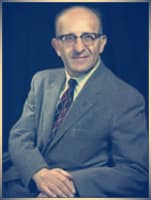
Cryptologic History:

Dr. Abraham Sinkov

1907-1998

Registry Sponsor(s): Mr. & Mrs. Charles E. Girhard

Dr. Sinkov was one of the first three people hired by William Friedman to work with him at the Signals Intelligence Service. This cryptologic pioneer was a mathematics teacher when Friedman hired him and went on to excel as a cryptanalyst and a leader – eventually becoming a deputy director. He was inducted into the NSA/CSS Cryptologic Hall of Honor in 1999.

NSA/CSS Cryptologic Hall of Honor Page Details

In 1930, William Friedman, a senior civilian in the Army’s Signal Intelligence Service (SIS) was authorized to hire three civilians, at $2,000 per year — a fairly good salary in the early period of the Great Depression. On April 1, Frank Rowlett, a mathematics teacher from Virginia, reported for duty. Later that month, two mathematics teachers from Brooklyn came to Washington to work as cryptanalysts, Abraham Sinkov and Solomon Kullback.

Abraham Sinkov, the son of immigrants from Russia, was born in Philadelphia, but grew up in Brooklyn. After graduating from Boys High School — what today would be called a “magnet school” — he took his B.S. in mathematics from City College of New York. (By coincidence, one of his close friends at Boys High and CCNY was Solomon Kullback). Mr. Sinkov taught in New York City schools but was unhappy with the working conditions and anxious to use his mathematics knowledge in practical ways.

The opportunity for a career change came in 1930. Sinkov and Kullback took the Civil Service examination and placed high. Both received mysterious letters from Washington asking about their knowledge of foreign languages. Sinkov knew French and Kullback, Spanish. This was acceptable to their prospective employer, and they were offered positions as junior cryptanalyts. Although neither was quite certain what a cryptanalyst did, they accepted.

The small SIS organization had the primary mission of compiling codes and ciphers for use by the U.S. Army. Its secondary task was to attempt to solve selected foreign codes and ciphers — this was not necessarily done for intelligence purposes but as a way to keep the cryptanalysts abreast of new developments in the field.

William Friedman put his new employees through a rigorous course of study of his own design in cryptology, bringing them to high levels of skill in making and breaking codes and ciphers. Friedman also encouraged other self-improvement endeavors: his employees trained summers at a camp at Ft. Meade to earn commissions in the military reserves. Both Sinkov and Kullback also went on to receive doctorates in mathematics. Sinkov received his in mathematics in 1933 from The George Washington University.

SIS grew slowly throughout the early 1930s. However, successes against Japanese diplomatic machine systems after 1935 provided the U.S. government with critical information during a series of crises, resulting in more personnel, bigger budgets, and a wider range of activities for the organization. In 1936, Dr. Sinkov was assigned to the Panama Canal Zone, where he established the U.S. Army’s first permanent intercept site outside the continental United States.

In January 1941, while Great Britain battled Nazi Germany but nearly a year before the United States entered the Second World War, Captain Sinkov was selected as a member of a delegation to the United Kingdom for initial sharing of information about the two countries’ respective cryptologic programs. The delegation returned in April with mixed results to report. Sinkov and his colleagues had been shown Bletchley Park, the secret headquarters for British cryptology, and exchanged information on German and Japanese systems. It is still unclear how much the American delegation was told about British success against the German ENIGMA machine, but Sinkov later recalled that they were told about the ENIGMA problem only a short while before the delegation was to leave, and that details were sketchy. Nevertheless, the mission to the UK was a success overall and helped give U.S.-UK cryptologic relations a strong practical foundation.

After the Japanese sneak attack on Pearl Harbor on 7 December 1941, the Japanese also attacked the Philippine Islands. General Douglas MacArthur had been ordered to leave the Philippines and re-establish U.S. Army headquarters in Australia, from whence counterattacks might be launched. MacArthur recognized the need for cryptologic support, thus, on 15 April 1942, he established the Central Bureau (CBB), cobbling it together from refugee elements of American cryptologists evacuated from the Philippines, Australian cryptologists, and other Allied contingents. CBB began in Melbourne, then moved to Brisbane.

In July 1942, Major Sinkov arrived in Melbourne as commander of the American detachment at CBB. The Director of CBB on paper was General Spencer B. Akin, MacArthur’s chief signal officer, but General Akin in practice seldom visited the organization. He had worked with Sinkov in Washington and in Panama, and confidently left CBB operations under his control.

Dr. Sinkov, who demonstrated strong organizational and leadership qualities in addition to his mathematics skills, brought this group of Americans and Australians — representing also different military services from their countries — into a cohesive unit. CBB quickly became a trusted producer of Signals Intelligence for MacArthur and his senior commanders. This SIGINT enabled consistent success in the air war against the Japanese and allowed MacArthur to win some stunning victories in the ground campaign in New Guinea and the Philippines.

After the war, Sinkov rejoined SIS, now renamed the Army Security Agency, and, in 1949, when the Armed Forces Security Agency (AFSA) — the first centralized cryptologic organization in the United states — was formed, Sinkov became chief of the Communications Security program. He remained in this position as AFSA made the transition into the National Security Agency.

In 1954, Dr. Sinkov became the second NSA official to attend the National War College (the first was Dr. Louis Tordella). Upon his return, he became Deputy Director for Production, effectively swapping jobs with his old colleague Frank Rowlett. Dr. Sinkov retired from NSA in 1962.

Dr. Abraham Sinkov lived in retirement in Arizona after two careers, 32 years in NSA (and its predecessors), followed by an appointment as a professor of mathematics at Arizona State University.

Note – In 1966, he wrote Elementary Cryptanalysis: A Mathematical Approach, one of the first books on the subject, directed at high school students and available to the general public.