




Explore upcoming events from across the Foundation – See Calendar

O
X

About Us

About Us

Advancing cybersecurity awareness, education, and innovation for a safer digital world.

Our Team

Meet the leaders and visionaries driving the NCF's mission forward every day.

FAQs

Find quick answers about our mission, membership, and how to get involved.

Our History

From codebreakers to cyber defenders — preserving a legacy that shapes the future.

NCF Financial Data

Review audited reports and filings that reflect our commitment to transparency, accountability, and responsible stewardship.

nav about us group of professionals in conversation

More Than a Mission — A Movement

The NCF brings together educators, experts, and enthusiasts who believe in building an informed, cyber-safe future.

Programs & Events

All Programs

Explore all of the NCF's programs driving cyber awareness, education, and history forward.

Escape Room

Hands-on puzzle challenge: crack codes, solve clues, experience real-time cryptologic logic.

Convening to Act

Catalyzing strategic dialogue on emerging cyber & cryptologic challenges in partnership with NSA.

Cocktails & Codebreakers

A celebratory evening honoring cryptologic legacy, networking, and thought leadership.

Crypto Cup

A signature fundraiser merging sport and mission — advancing cryptologic education through golf.

Cryptologic History Symposium

An academic event that explores the role of cryptology across eras and its lasting influence on security, strategy, and society.

Student Ambassador Program

Catalyzing strategic dialogue on emerging cyber & cryptologic challnges in partnership with NSA

Cyber Saturday

A full-day, interactive event for youth and families to explore cybersecurity through play.

Cyber Feud

A live, fast paced competition where students test cyber knowledge in game show format.

Maryland History Day

Highlighting student research on cryptology's impact across Maryland's past.

nav programs and events three students learning together

Events That Build a Cyber-Safe Future

The NCF programs spark growth, foster collaboration, and make cybersecurity a shared mission across generations and industries.

Resources

Podcast Series

Listen to #CyberChats and Cyber Pulse — the NCF's two podcasts exploring stories, insights, and innovations shaping cybersecurity.

Cyber Games

Engaging students through interactive challenges that build real-world cybersecurity skills and teamwork.

Downloads

Access classroom-ready lessons, tools, and activities to teach cryptology, cybersecurity, and digital citizenship.

Insights & Updates

Explore thought leadership, event recaps, and the latest news from the world of cryptology and cyber education.

Outsmart Cyberthreats Collections

Clear, engaging resources that build foundational cyber safety skills through activities and practical guidance.

Cybersecurity Curriculum Guidelines

Guidelines that support creating cybersecurity-focused lessons and inspire students to pursue cyber careers.

How to Be Cyber Safe + Savvy — A Data Care Booklet for Adults

Clear, practical steps to protect their devices, data, and privacy from today's online threats.

nav resources two young students learning on laptop

Empowering the Next Generation of Cyber Thinkers

Through resources, stories, and shared knowledge, the NCF helps educators, professionals, and students strengthen our cyber future together.

Cryptologic History

Trailblazers

Discover the pioneers who broke barriers and paved the way for future generations in cryptology.

Historical Figures in Cryptology

Meet the brilliant minds whose work in codes and communication shaped global history.

Cryptologic Bytes

Dive into quick reads and fascinating facts that reveal hidden history of code communication.

Commemorate

Honor the people and achievements that advanced the art and science of cryptology.

Acquisitions Archive

Explore rare artifacts, documents, and exhibits preserved to tell the evolving story of cryptology.

NSA/CSS Cryptologic Hall of Honor

Celebrate individuals whose exceptional contributions strengthened our nation's intelligence security.

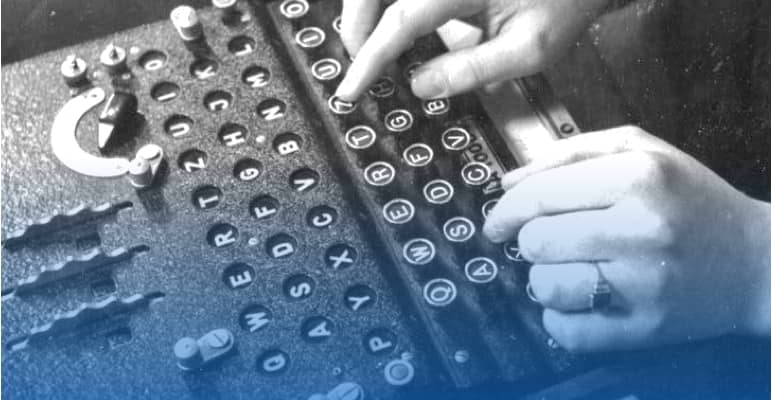
nav cryptologic history hands using engima machine

Preserving the Code of Our Past

From hidden messages to historic breakthroughs, the NCF keeps the stories of cryptology alive—honoring the people, events, and innovations that shaped modern intelligence.

Explore upcoming events from across the Foundation – See Calendar

About Us

About Us

About Us

Advancing cybersecurity awareness, education, and innovation for a safer digital world.

Our Team

Meet the leaders and visionaries driving the NCF's mission forward every day.

FAQs

Find quick answers about our mission, membership, and how to get involved.

Our History

From codebreakers to cyber defenders — preserving a legacy that shapes the future.

NCF Financial Data

Review audited reports and filings that reflect our commitment to transparency, accountability, and responsible stewardship.

nav about us group of professionals in conversation

More Than a Mission — A Movement

The NCF brings together educators, experts, and enthusiasts who believe in building an informed, cyber-safe future.

Programs & Events

Programs & Events

All Programs

Explore all of the NCF's programs driving cyber awareness, education, and history forward.

Escape Room

Hands-on puzzle challenge: crack codes, solve clues, experience real-time cryptologic logic.

Convening to Act

Catalyzing strategic dialogue on emerging cyber & cryptologic challenges in partnership with NSA.

Cocktails & Codebreakers

A celebratory evening honoring cryptologic legacy, networking, and thought leadership.

Crypto Cup

A signature fundraiser merging sport and mission — advancing cryptologic education through golf.

Cryptologic History Symposium

An academic event that explores the role of cryptology across eras and its lasting influence on security, strategy, and society.

Student Ambassador Program

Catalyzing strategic dialogue on emerging cyber & cryptologic challnges in partnership with NSA

Cyber Saturday

A full-day, interactive event for youth and families to explore cybersecurity through play.

Cyber Feud

A live, fast paced competition where students test cyber knowledge in game show format.

Maryland History Day

Highlighting student research on cryptology's impact across Maryland's past.

nav programs and events three students learning together

Events That Build a Cyber-Safe Future

The NCF programs spark growth, foster collaboration, and make cybersecurity a shared mission across generations and industries.

Resources Code

Resources

Podcast Series

Listen to #CyberChats and Cyber Pulse — the NCF's two podcasts exploring stories, insights, and innovations shaping cybersecurity.

Cyber Games

Engaging students through interactive challenges that build real-world cybersecurity skills and teamwork.

Downloads

Access classroom-ready lessons, tools, and activities to teach cryptology, cybersecurity, and digital citizenship.

Insights & Updates

Explore thought leadership, event recaps, and the latest news from the world of cryptology and cyber education.

Outsmart Cyberthreats Collections

Clear, engaging resources that build foundational cyber safety skills through activities and practical guidance.

Cybersecurity Curriculum Guidelines

Guidelines that support creating cybersecurity-focused lessons and inspire students to pursue cyber careers.

How to Be Cyber Safe + Savvy — A Data Care Booklet for Adults

Clear, practical steps to protect their devices, data, and privacy from today's online threats.

nav resources two young students learning on laptop

Empowering the Next Generation of Cyber Thinkers

Through resources, stories, and shared knowledge, the NCF helps educators, professionals, and students strengthen our cyber future together.

Cryptologic History

Cryptologic History

Trailblazers

Discover the pioneers who broke barriers and paved the way for future generations in cryptology.

Historical Figures in Cryptology

Meet the brilliant minds whose work in codes and communication shaped global history.

Cryptologic Bytes

Dive into quick reads and fascinating facts that reveal hidden history of code communication.

Commemorate

Honor the people and achievements that advanced the art and science of cryptology.

Acquisitions Archive

Explore rare artifacts, documents, and exhibits preserved to tell the evolving story of cryptology.

NSA/CSS Cryptologic Hall of Honor

Celebrate individuals whose exceptional contributions strengthened our nation's intelligence security.

nav cryptologic history hands using engima machine

Preserving the Code of Our Past

From hidden messages to historic breakthroughs, the NCF keeps the stories of cryptology alive—honoring the people, events, and innovations that shaped modern intelligence.

(CCG) Cybersecurity Curriculum Guidelines

Guidelines that support creating cybersecurity-focused lessons and inspire students to pursue cyber careers.

Designed for high school audiences, the Guidelines introduce core principles, real-world challenges, and the mindset needed to thrive in cybersecurity—and in any career that demands critical thinking and problem-solving.

About the Guidelines

The Cybersecurity Curriculum Guidelines challenge students to explore the principles that keep our digital world secure. Through real-world problems and solutions, they’ll confront the complexity of global systems, think like both defenders and adversaries, and grapple with the ethical questions at the core of cybersecurity in a connected society.

Why These Guidelines Matter

As society grows increasingly dependent on networks, software, and the data they carry, the need for skilled cybersecurity professionals has never been greater—yet the talent gap remains wide. These Guidelines aim to inspire educators, curriculum providers, and industry to create engaging high school programs that spark interest in cybersecurity careers while fostering a mindset that benefits any profession. Students will learn to think like adversaries, protect critical infrastructure, and safeguard personal data.

While rooted in computer science, the Guidelines define cybersecurity as a distinct, multidisciplinary field that blends technical skills with insights from the social sciences. This approach helps students understand the societal impact of technology, anticipate threats, and respond effectively.

Designed for learners from diverse backgrounds, the curriculum encourages curiosity, problem-solving, and broad engagement—exposing students to the many paths within the cybersecurity field and the vital role they can play in our connected world.

What's included

icon checkmark

Eight Core Big Ideas

A comprehensive framework covering ethics, trust, connectivity, data security, system security, adversarial thinking, risk, and societal implications.

icon checkmark

Essential Questions & Learning Objectives

Guiding prompts and measurable goals to help educators shape engaging, outcomes-driven lessons.

icon checkmark

Enduring Understandings

Key concepts students should retain long after the course ends, forming the backbone of a cybersecurity mindset.

icon checkmark

Glossary of Terms

A ready-to-use reference for students and teachers, clarifying technical language and concepts throughout the curriculum.

About the development team

The Cybersecurity Curriculum Guidelines were created by a team of educators, researchers, and industry leaders with deep expertise in teaching, technology, and national security. Together, they bring decades of experience spanning K-12 instruction, university research, government programs, and curriculum design—uniting a shared mission to inspire the next generation of cyber thinkers and professionals.

The Development Team

The Cybersecurity Curriculum Guidelines were created by a team of educators, researchers, and industry leaders with deep expertise in teaching, technology, and national security. Together, they bring decades of experience spanning K-12 instruction, university research, government programs, and curriculum design—uniting a shared mission to inspire the next generation of cyber thinkers and professionals.

Dr. Melissa Dark

Dr. Melissa Dark began her career in cybersecurity education as a Professor at Purdue University. She has led a number of innovative, national projects in cybersecurity education to include:

  • INSuRE is a cybersecurity research collaborative using the cybersecurity student talent pool to work on cybersecurity problems supplied by federal agencies and national labs.
  • Development of a concept inventory to diagnose learners’ misconceptions in secure programming.
  • Cyber fMRI is investigating the use of representational fluency to develop deep conceptual understanding of complex cybersecurity topics.
  • GenCyber is a program to grow the cybersecurity pipeline through summer camps across the nation for students and teachers.
  • NCCP is funding 54 grants to develop core cybersecurity curriculum to be made widely available through a curriculum/learning management system to increase the quantity and quality of cybersecurity curricula.

Melissa retired from Purdue in 2019 and is now running Teach Cyber, a non-profit company dedicated to advancing cybersecurity education in the United States.

Dr. Jenny Daugherty

Dr. Jenny Daugherty is an education consultant with over 15 years of experience in K-12 STEM education. Prior to becoming a consultant, Jenny was an Associate Professor at Louisiana State University and Purdue University in Colleges of Education and Technology. Jenny earned her doctoral degree in Human Resource Education from the University of Illinois, Urbana-Champaign where she was awarded a doctoral fellowship with the National Center for Engineering and Technology Education. She was a co-Principal Investigator for the $2.9 million National Science Foundation funded Project Infuse, which researched engineering-infused science teacher professional development. Jenny has served as a site visitor for GenCyber since 2016.

Mark Emry

Mark Emry earned his Bachelor of Science in Psychology from the University of Nebraska at Omaha, and his teaching certificate was earned through South Dakota State University. He earned his Master of Arts degree in Educational Technology from Augustana University in Sioux Falls, SD. Mark has 27 years of teaching experience ranging from Middle School Language Arts and Science to his current position as a Computer Science teacher at McNeil High School, Round Rock Independent School District, Austin Texas. Among the courses Mark teaches are Exploring Computer Science, AP Computer Science A and AP Computer Science Principles (AP CSP). He has served as a table leader for the reading of the AP CSP exam since its inception in 2017. Recently, Mark was awarded the 2019 NCWIT Aspirations Educator Award. In addition, Mark has designed and presented numerous professional development workshops in the region including functioning as lead facilitator for the “Expanding Pathways into Computer Science across South Dakota” workshop located at Black Hills State University. As part of the Research Experiences for Teachers grant, Mark developed a Cybersecurity curriculum which has been implemented in high schools across South Dakota. He grew his background in coding and cybersecurity while working as a software engineering lead for various contractors of the United States Geological Survey.

Dr. Dan Massey

Dr. Dan Massey is Professor of Computer Science at the University of Colorado Boulder and Director of the Technology, Cybersecurity, and Policy Program. Prior to joining CU Boulder, he was a Program Manager in the Cyber Security Division, Science and Technology Directorate, U.S. Department of Homeland Security (DHS) where he developed and managed the Cyber Physical Systems (CPSSEC) program for cybersecurity in automobiles, medical devices, building controls, and other systems that combine the cyber and physical worlds. He also developed and managed the Distributed Denial of Service Defense (DDoSD) program that includes both traditional IT environments and key telephony services such as 911 and NG911. He has more than 25 years of experience and is the author over 100 peer reviewed publications on networking and cyber security, including co-editor of the DNS Security Standard (RFCs 4033, 4034, and 4035). Dr. Massey has been collaborating with St. Vrain Valley School District teachers to introduce the CyberPatriot program and currently coaches both middle and high school teams.

Jennifer Peyrot

Jennifer Peyrot has been in education for over 10 years. She started off as a high school social studies teacher and has been working as an instructional technology coordinator since 2012. Jennifer has played a central role in several district-wide technology-driven initiatives. The experiences and training she had while serving in the U.S. Army allowed her to recognize the impact that the cybersecurity workforce shortage can have on our national security and she started getting involved in bringing cybersecurity into the K-12 setting.


  • GenCyber Colorado Program Director in 2018
  • GenCyber Camp participant in August 2017
  • Co-facilitator of the SVVSD Computer Science Collaborative 2017 – present
  • Co-facilitator of the SVVSD Blended Learning Collaborative 2016 – present
  • Co-organizer and instructor at SVVSD annual Tech Camp from 2015-2018.
  • Co-organizer of EdCamp Denver 2015 and EdCamp Longmont 2016.
  • Instructs teachers and school site administrators on the systematic implementation of instructional technologies. 2013 – present.
  • Classroom Teacher, High School Social Studies 2007-2012
  • Intern, National Governors Association-Homeland Security Dept., Apr.-Jul. 2004
  • Veteran of U.S. Army as a 98C, Signals Intelligence Analyst, 1997-2000

Acknowledging our Sponsors

The NCF thanks Northrop Grumman Corporation, Booz Allen Hamilton, the National Security Agency, and the Hewlett Foundation for their generous support of the Cybersecurity Curriculum Guidelines. We also recognize Lockheed Martin and Northern Trust for their past contributions to our educational programs. Their investments make it possible to deliver national K-12 guidelines that equip educators and students with the knowledge and skills essential to defending our nation’s cyber domain.

Get the Cybersecurity Curriculum Guidelines