



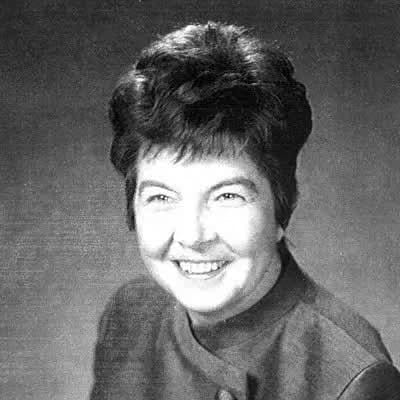
In early 1943, Juanita Morris, at a small college in North Carolina, wished to contribute to the war effort and volunteered at the nearest recruiting office. By April, she was at the Army cryptologic headquarters at Arlington Hall Station. While awaiting her security clearance, the Signal Security Agency (SSA) put her into unclassified training in cryptanalysis; she became fascinated with the subject.
At the end of the war, her supervisor asked her to stay on, rather than be demobilized, and she agreed. In 1948, she married Warren Moody, a noncryptologic employee. Ms. Moody supervised NSA’s day-to-day — sometimes, minute-by-minute — response to the Cuban Missile Crisis as head of the major element responsible for Signals Intelligence (SIGINT) on that region. In addition to directing production and reporting, she frequently gave impromptu briefings to high-level civilian and military leaders. She often worked around the clock, grabbing only a few hours sleep on a cot in her office.
In the years following the Cuban Missile Crisis, Ms. Moody was assigned to higher positions within the production organization at NSA. She revolutionized SIGINT reporting, and put NSA into the White House Situation Room. However, in the mid-1970s, she was one of NSA’s spokespersons during Congressional hearings and was incorrectly identified by the media as having been involved in intelligence community abuses.
Juanita Moody retired from NSA in 1976 after 33 years of service. The previous December she had become the first recipient of the National Intelligence Medal of Achievement, presented by then Director of Central Intelligence George Bush.
Please read the March 2021 Smithsonian Magazine feature “The Once-Classified Tale of Juanita Moody,” (part of their Women Who Shaped History report) for much more information.