




Foundation FAQs
What is the mission of the NCF?
The NCF is a private 501(c)(3) organization dedicated to advancing the nation’s interest in cybersecurity and cryptology through education, partnerships, leadership, and commemoration of cryptologic history.
Is the NCF part of the U.S. government?
No — the NCF is an independent nonprofit. While it partners closely with government entities like the NSA, it remains separate from federal oversight.
How does the NCF work with the NSA?
The NSA–NCF partnership began in 1996. The NCF supports NSA’s efforts by promoting STEM and cyber education, convening public-private dialogues, and preserving the contributions of cryptologic professionals.
Is the National Cryptologic Foundation (NCF) the same as the National Cryptologic Museum (NCM)?
No — they are separate organizations. The National Cryptologic Museum is operated by the NSA, while the NCF is an independent nonprofit. However, the NCF supports the Museum in many ways, including funding educational initiatives, helping preserve and share cryptologic history, and collaborating on exhibits and public programs.
What does the NCF do to educate the public and students?
The NCF delivers educational resources, programs, events, and curriculum for K–12 audiences — including virtual classrooms and national outreach initiatives — to build cyber awareness and career readiness.
How does the NCF preserve cryptologic history?
The Foundation commemorates cryptologic heritage through storytelling, exhibitions (in collaboration with the National Cryptologic Museum), and honoring cryptologic pioneers who served in silence.
Where can I find audits or financial information about the NCF?
The NCF submits annual audited financial reports, including its Form 990 and Financial Summary. These are publicly accessible via Guidestar or this website.
Donation FAQs
How can I support the NCF?
You can support the NCF by becoming a member, making a donation, sponsoring a program, or donating an artifact. Each option aligns with sustaining programs, preserving history, and inspiring learners.
Can I make a tribute donation in memory OR in honor of someone?
Yes. Tribute donations include:
In Memoriam Registry — $100+: Places honorees in the Registry on our website and at the National Cryptologic Museum.
In Memoriam Panel — $5,000+: Recognizes honorees in a permanent, publicly visible tribute.
Are donations tax-deductible?
Yes — The NCF is a registered 501(c)(3) nonprofit. Gifts are generally tax-deductible; consult your tax professional for specifics.
What other ways can I give?
You can donate via bank transfers, employer matching, PayPal, Combined Federal Campaign (CFC), or Venmo. The NCF also accepts artifact contributions that enrich Museum and education programs.
Cryptology FAQs
What is cryptology?
Cryptology is the science of protecting information and communications through codes and ciphers, as well as the process of breaking them. It includes two main branches: cryptography (the creation of secure codes) and cryptanalysis (the study and breaking of codes).
How are cryptology and cybersecurity related?
Cryptology is one of the core foundations of cybersecurity. Modern cybersecurity uses cryptographic methods to protect data, authenticate users, and secure communications — the same principles that have been developed and refined through centuries of cryptologic practice.
What’s the difference between cryptology, cryptography, and cryptanalysis?
Cryptology is the overall field of study.
Cryptography focuses on designing secure systems for protecting information.
Cryptanalysis is the art and science of breaking those systems to find weaknesses.
Has cryptology always been digital?
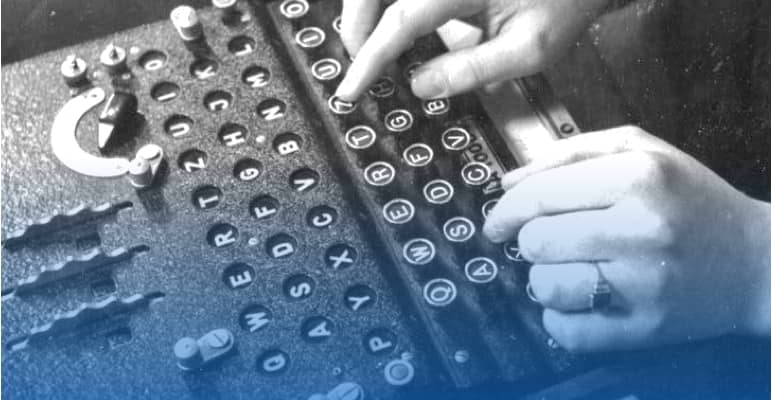
No — cryptology has existed for thousands of years, long before computers. From ancient substitution ciphers to World War II code machines, cryptology has evolved from pen-and-paper puzzles to advanced algorithms used in today’s digital security.
Why is cryptology important today?
Every time you send a secure email, make an online purchase, or unlock your phone, cryptology is working in the background to keep your information safe. It’s essential to national security, personal privacy, and the functioning of our global digital economy.
What careers involve cryptology?
Cryptology skills are used in roles such as cryptographers, security engineers, intelligence analysts, and cybersecurity specialists. These professionals work in government, the military, private industry, and research — helping protect sensitive information and develop next-generation security solutions.